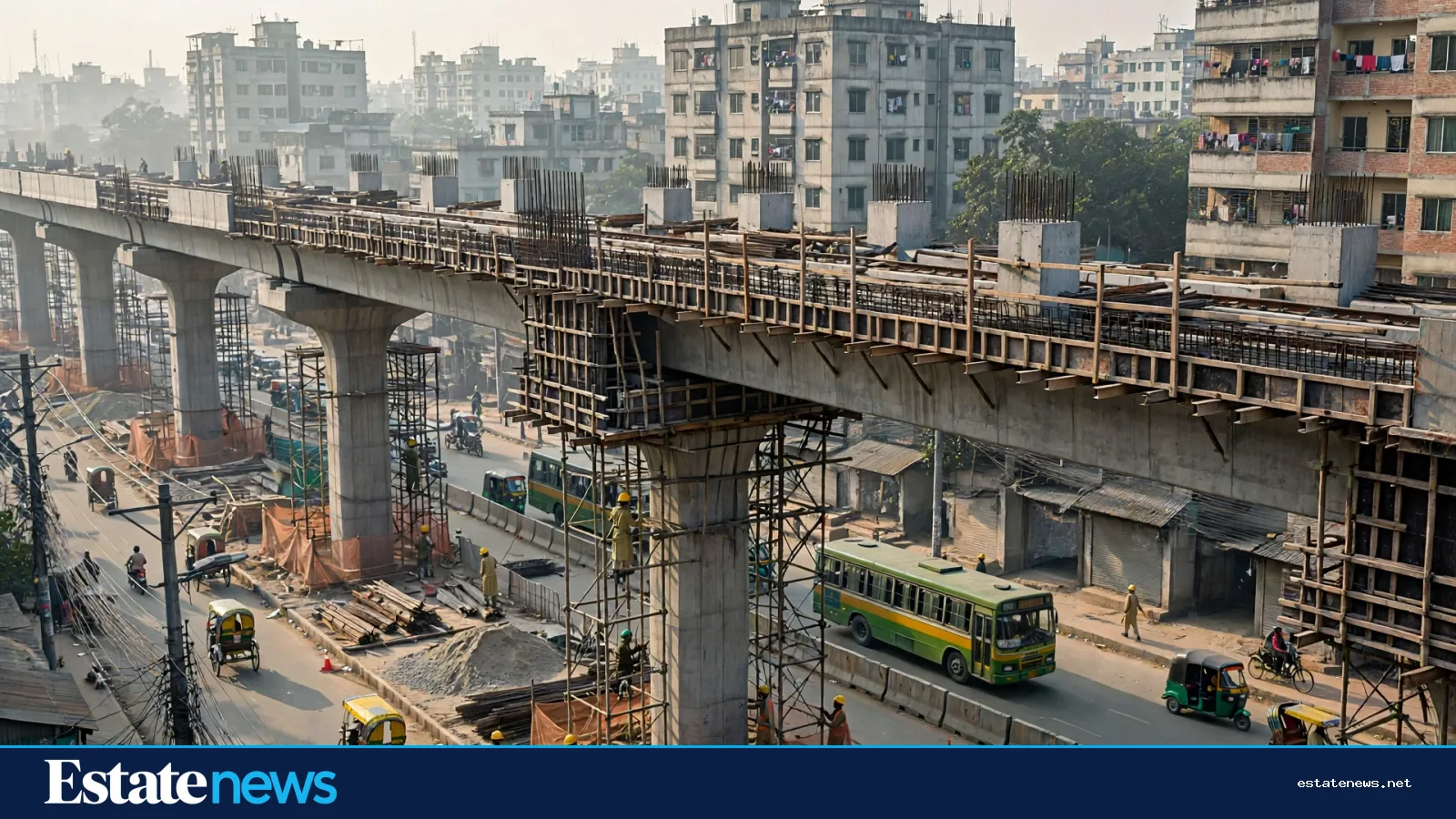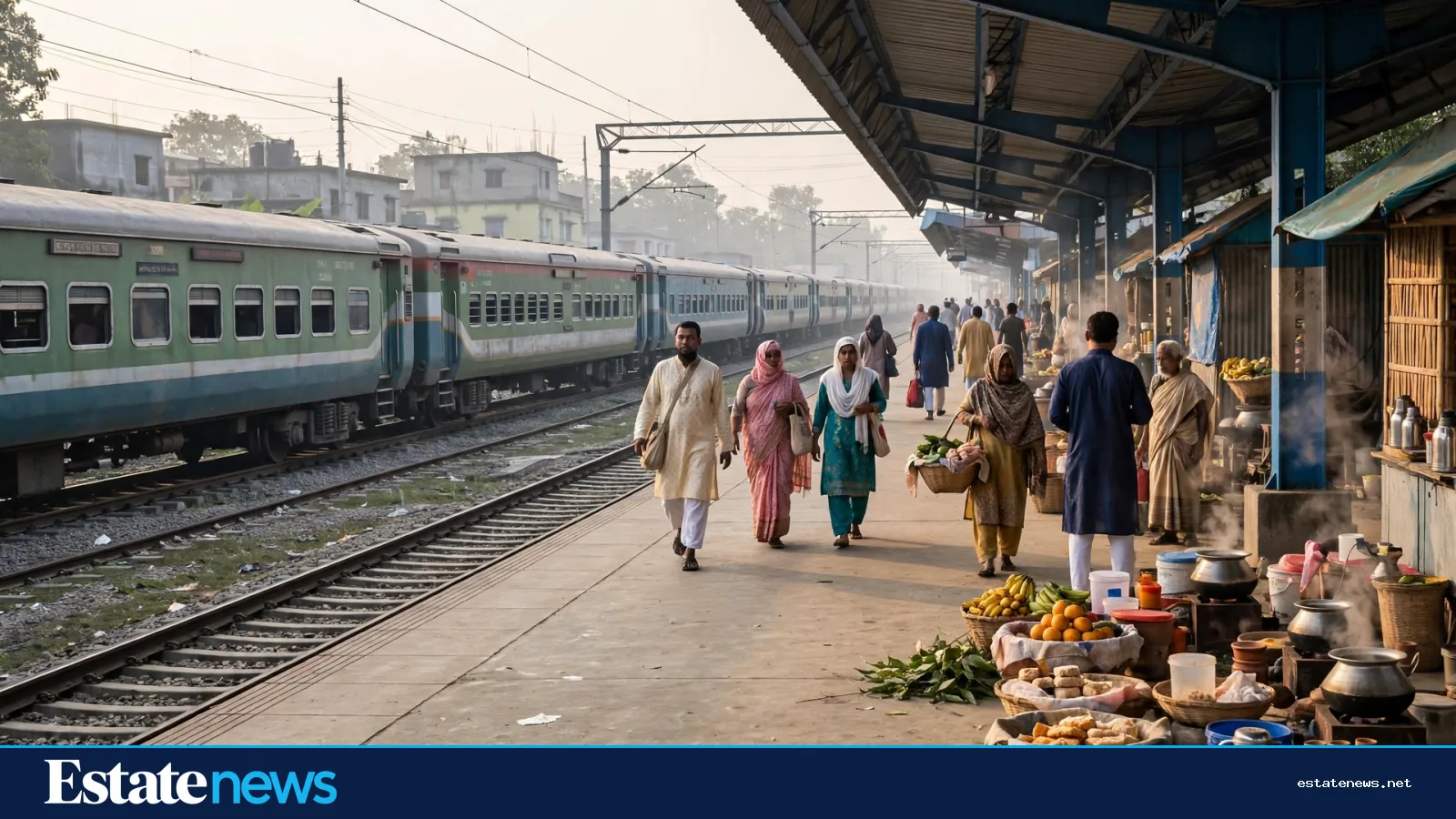
Every Dhaka to Chattogram train journey carries a detour that passengers feel but rarely see on a map. The line runs north through Tongi before turning south-east, adding kilometres that a direct route would not need. A proposal now under study by Bangladesh Railway would cut that detour out. The Daily Sun reported on 1 November that a proposed 90 kilometre chord line between Dhaka and Cumilla could shorten the Dhaka-Chattogram route by around 80 kilometres, from about 320 kilometres to about 240, and cut journey times from five to six and a half hours to three to three and a half hours.
Those numbers are the proposal's case in a single paragraph. They are also the reason to read the rest of the story carefully. The feasibility study is complete and design work is under way, according to the report, but land acquisition, a development project proposal, financing and administrative approvals still lie ahead. No financing agreement has been reached. Bangladesh Railway is considering assistance from the Asian Development Bank and the European Investment Bank, and possible investment under a public-private partnership model. A chord line at this stage is a studied idea with a cost range, not a project with a start date.
Two ways to build it, two very different bills

The report puts two construction options on the table. One mixes 65 kilometres of elevated track with 25 kilometres underground, at an estimated Tk 75,000 crore. The other builds the full 90 kilometres elevated, at an estimated Tk 90,000 crore. Bangladesh Railway's chief planning officer, Md Rafiqul Islam, told the paper that the final cost would depend on the construction method chosen. The gap between the two figures, Tk 15,000 crore, is itself larger than many of the country's annual infrastructure budgets for a single sector, which gives a sense of the scale being discussed.
The proposed route would connect Dhaka with Cumilla through Fatullah, Shyampur and Narayanganj, crossing the Shitalakkhya River. The elevated section may extend from Dhaka to the Gomti area of Daudkandi, with the precise alignment to be determined after the final design. Md Abidur Rahman, project director of Bangladesh Railway's Railway Connectivity Improvement Preparatory Facility, said reducing the lengthy detour in the existing network was a key objective. The connection could also ease pressure on the existing Tongi-Kamalapur corridor by providing an alternative route through Narayanganj.
What a shorter railway would change, if it is built
For passengers, the change is straightforward: a journey that currently eats most of a working day becomes a morning trip. Business travellers between Dhaka and Chattogram, students, and families visiting relatives in Cumilla would all feel the difference in hours saved, not in abstract kilometres. For freight, a shorter and less congested route matters in a different way, since the port city and the capital carry much of the country's trade between them, and a faster rail link gives exporters and importers an alternative to a highway that is often congested.


For housing, the honest effect is slower and more local. Cumilla is already a family city on the Dhaka-Chattogram corridor, with its own schools, hospitals and markets, and its housing market does not wait for a railway proposal to exist. A chord line, if built, would make Cumilla a more practical base for people who work in Dhaka part of the week, and it would put Narayanganj's Fatullah and Shyampur areas on a new kind of map, as places on a direct line rather than on a branch. That is a change in how people live, not a price forecast. Nobody can say today what it would do to land values in any particular neighbourhood, and a seller who prices a plot today as if the chord line were already running is selling a future that has not been funded.
The stages that still have to happen
It helps to name the stages plainly, because each one can take years. Design must be finished and an alignment fixed, so that landowners know which plots the line would cross. Land must be acquired, with compensation settled, a process that has slowed many Bangladeshi projects. A development project proposal must be approved, financing must be agreed with lenders or partners, and construction must be tendered and built. At each stage, costs can rise and designs can change. The chord line has cleared the feasibility stage. That is real progress, and it is also the earliest stage at which a project can be described as serious.
There is a useful comparison close at hand. Dhaka's metro lines spent years in study and design before construction contracts were signed, and the October 2026 metro contracts for Lines 1 and 5 still carry a completion target of 2033. A 90 kilometre intercity railway, with river crossings and urban sections, would face a comparable timeline at best. A buyer in Cumilla or Narayanganj who is told that the chord line makes a plot urgent should ask which stage the project is at, and should buy the plot for the schools, roads, water and neighbours it has today.
Why the proposal still matters now
A proposal this large matters before it is built, because it shapes how planners think about the corridor. If the direct route is the future, then stations, sidings and town plans along the Fatullah to Daudkandi stretch deserve attention now, before unplanned building fills the land a railway would need. If the route changes during design, then early attention saves later demolition and dispute. Either way, the corridor's towns gain from being discussed as connected places rather than as stops on a detour.
For readers in Cumilla, Narayanganj and Chattogram, the chord line is worth following as a railway story first and a housing story second. Watch for a fixed alignment, a financing agreement and a land acquisition notice. Those three milestones, when they appear, will tell you more about the line's future than any sales brochure can. Until then, the Dhaka to Chattogram train still runs the long way round, and the homes along both the old route and the proposed one should be judged on the life they offer today.