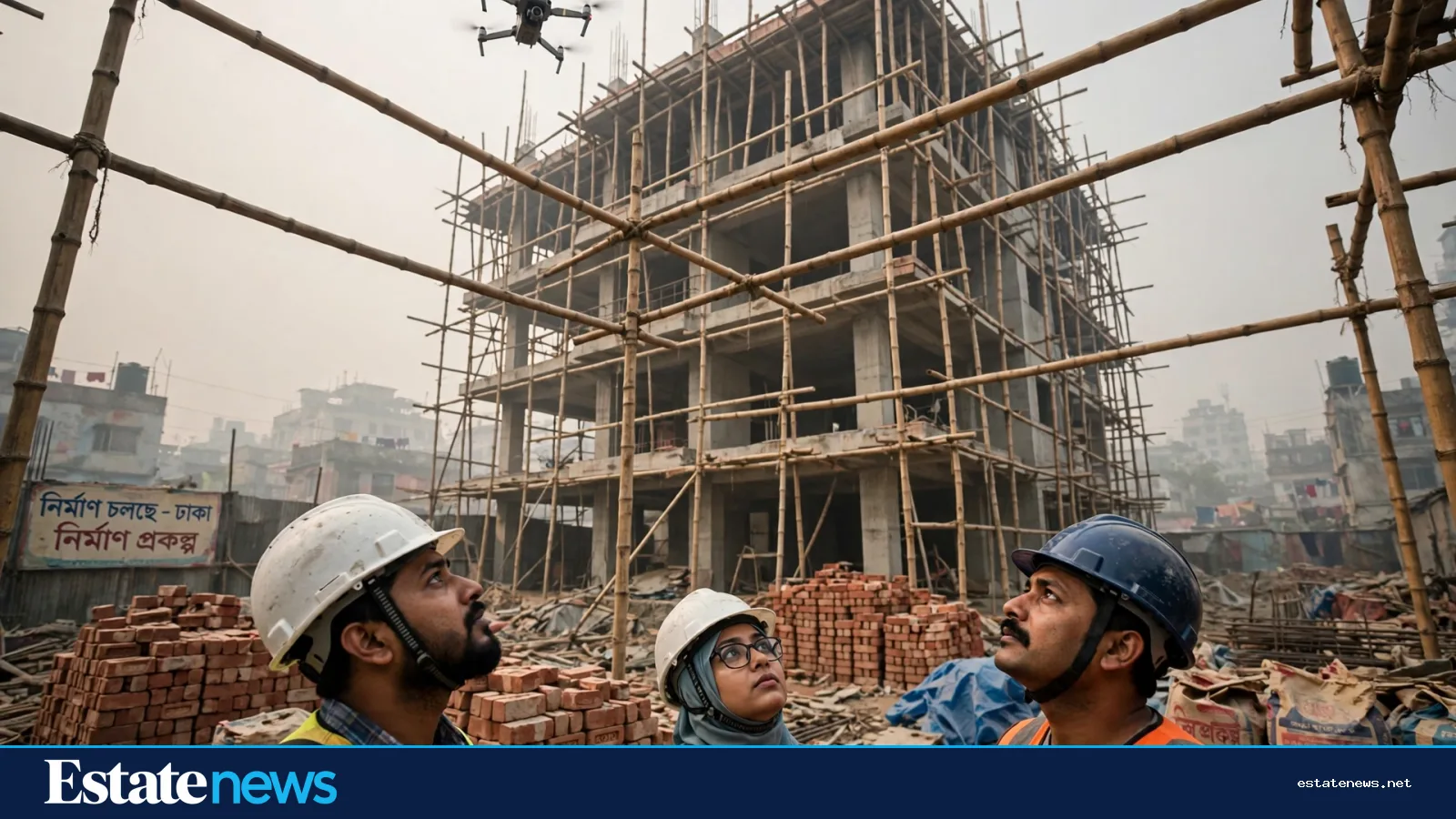
Stand outside a half-built apartment block in Dhaka these days and you may hear it before you see it: a small buzz overhead, and a quadcopter holding steady above the bamboo scaffolding while an engineer below watches a phone screen. The drone is not a toy on this site. It is doing three jobs that used to need scaffolding, a ladder and a long afternoon.
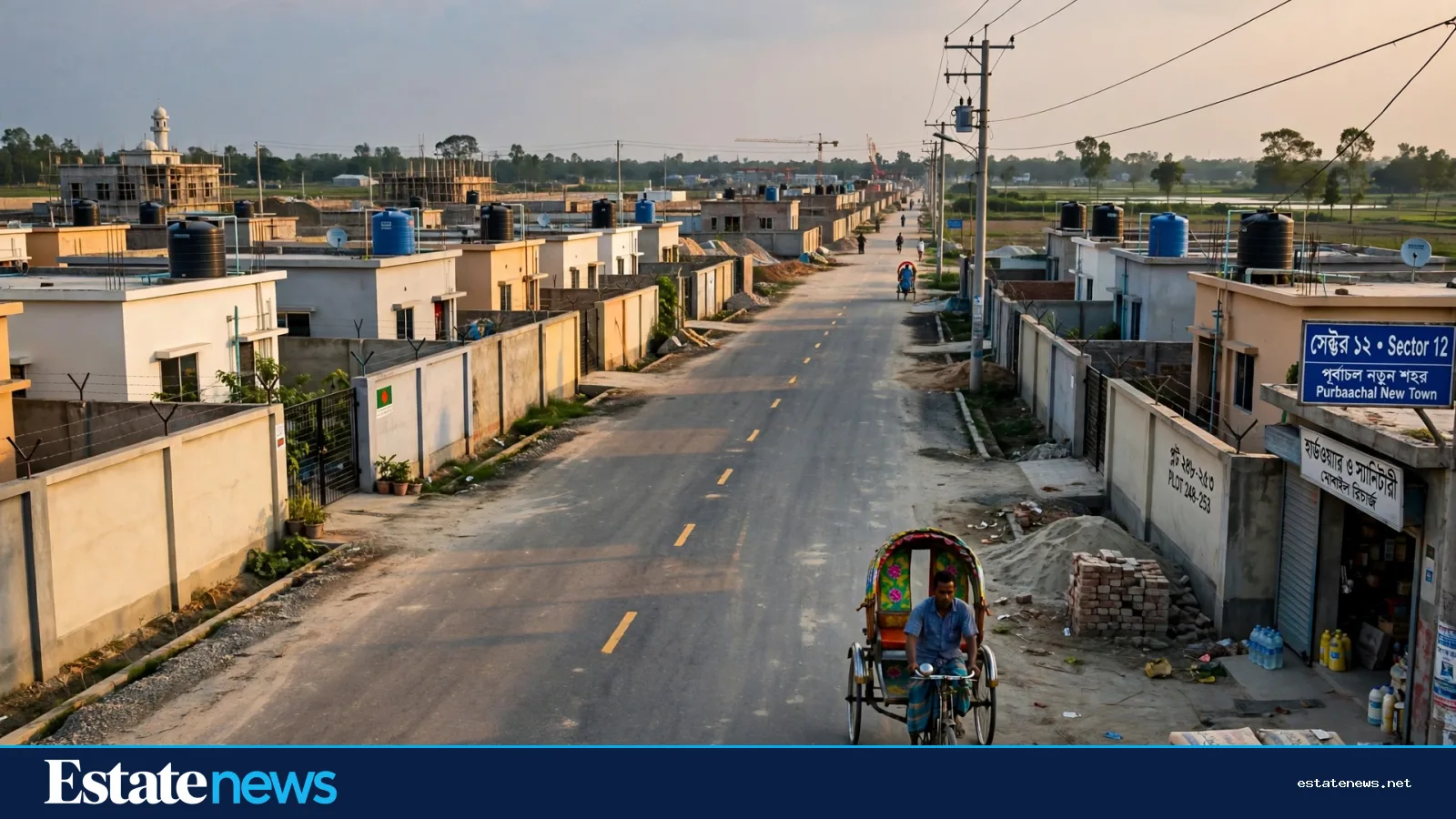
The first job is mapping. Before a brick is laid, a drone can fly a grid over a plot and build a measured picture of the land: its shape, its levels, where the boundary runs and what sits next to it. For a buyer, that matters because a plot that looks flat from the gate can hide a low corner that floods in the monsoon, and a survey from above shows the ground the way it actually lies.
Progress you can check from your chair

The second job is the one buyers care about most. A drone can photograph the same building from the same angle every week, floor by floor, and the pictures stack into a record of progress. A developer's brochure can say the sixth floor is done. A dated aerial photograph shows whether the slab is actually cast.
That record is useful in two directions. A builder can spot a delay early, when a floor that should have risen in a month has not moved. A buyer paying in instalments can ask to see the latest aerial pictures before the next payment, and compare them with the schedule in the agreement. The pictures do not settle a dispute on their own, but they make it much harder for either side to argue about what exists on the site.
Roof and facade inspection is the third job. A drone with a camera can look closely at a roof, a water tank base, the outside of a parapet and the top of a lift shaft, places that are hard and sometimes dangerous to reach. Cracks, ponding water and loose cladding show up in a photograph long before they show up as a leak in a top-floor flat.
The rules above the site


Flying a drone in Bangladesh is not a matter of buying one and taking off. The Civil Aviation Authority of Bangladesh requires permission for drone flights, and every flight needs a Special Flight Operations Certificate, known as an SFOC. The application goes to the authority in writing and must be submitted 60 days before the planned flight date. That applies to commercial work such as photography, videography, surveying and research, and the same certificate system covers recreational flights.
The standing rules are strict. A drone pilot must be at least 18 years old. Liability insurance covering injury and damage to people or property is mandatory. Flights are allowed only in daylight and in visual weather conditions, and the maximum height is 200 feet above ground level, about 60 metres. A drone must stay ten nautical miles from an aerodrome, and the pilot needs permission from the property owner for take-off and landing. A site survey is required before flying, to check the airspace, obstacles, nearby airfields and weather.
The framework is still changing. The Drone Registration and Flight Policy of 2020 divides drones into classes and the country into green, yellow and red zones. A draft set of Drone Regulations put forward in November 2024 would make licences mandatory for non-toy drones, with toy drones defined as devices under 250 grams without audio or video recording. Until new rules are finalised, the certificate system remains the route, and anyone hiring a drone operator should ask to see the permission letter before the flight.
What a drone cannot tell you
A drone is a camera with wings, and its limits are worth knowing. It cannot see inside a wall, test the strength of concrete, or tell you whether the steel inside a column was placed correctly. It cannot judge whether the paperwork for a flat is clean, and it cannot fly in heavy wind or rain. The pictures also need a trained eye. A roof that looks fine from 60 feet up can still hide a failed waterproofing layer, and a facade that photographs well can still be hiding damp behind the paint.
Used well, though, the machine changes who holds the evidence. A buyer no longer has to take a site engineer's word for the state of the roof. A builder no longer has to send a worker up a scaffold to check a gutter. The record sits on a phone, dated and repeatable, and it follows the building from bare plot to handover.
Estate News has followed the same rooftop logic in "Your Roof, Their Panels: The 10 Percent Free Power Deal for Public Buildings", where the roof earns money, and in "Your Next Car Plugs In: Where Dhaka Flat Owners Charge an Electric Car", where the parking level gets wired for the next decade. The cost of putting the building up in the first place is in "Construction Cost Per Square Foot in Bangladesh: What a House Really Costs in 2026". The drone belongs in that same set of tools: not a replacement for an engineer, a lawyer or a careful site visit, but a second pair of eyes that happens to fly.