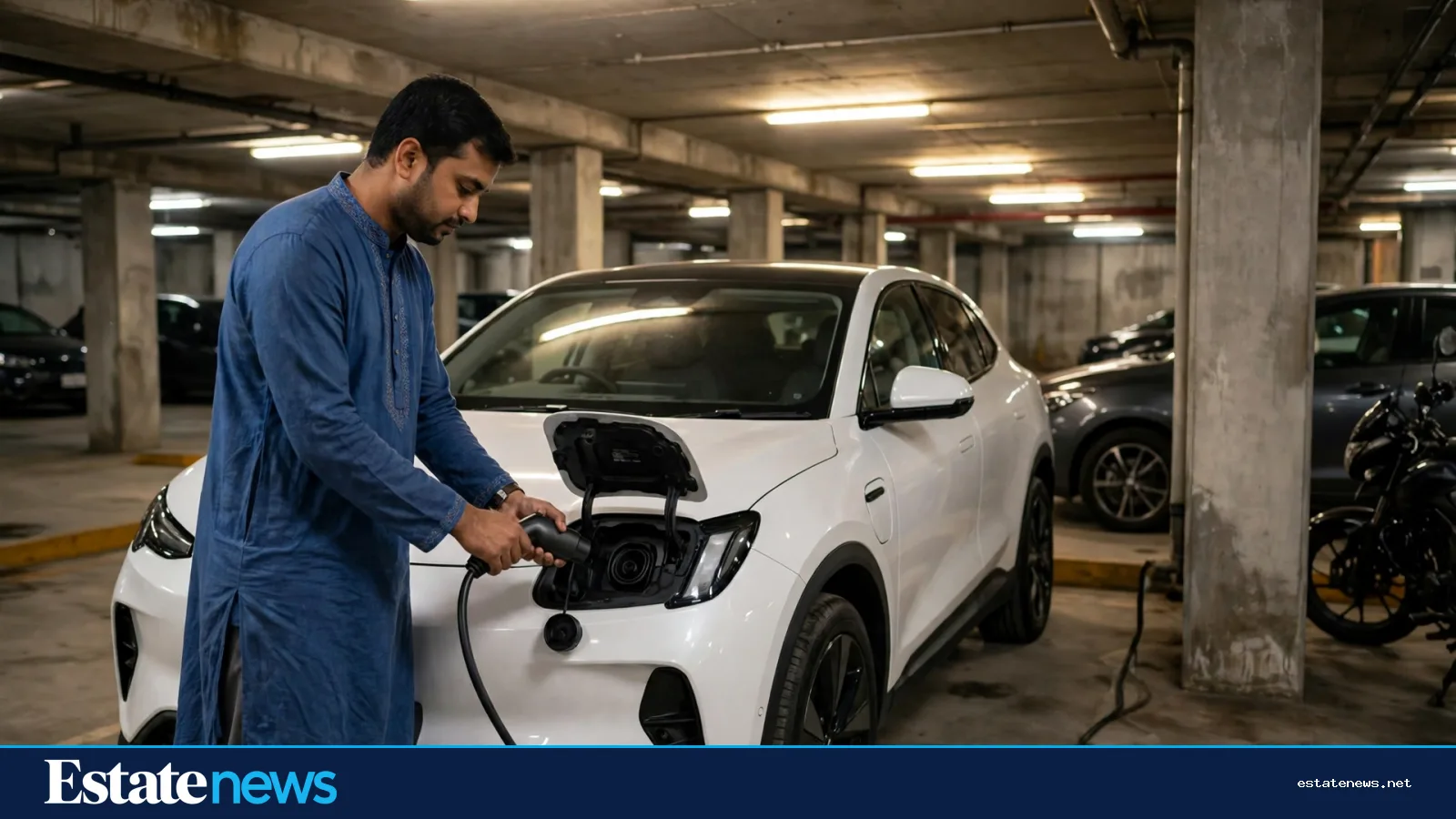
The electric car has arrived in Dhaka showrooms, and the question buyers ask first is not about the car. It is about the plug. Leapmotor's B10 and C10 range-extender cars entered Bangladesh through Toledo Motors Ltd, a subsidiary of the Anwar Group, as The Business Standard reported around 15 November. The B10 is expected at an introductory price of Tk 52 lakh, the C10 at Tk 61.5 lakh. The B10 runs about 86 kilometres on battery alone, and about 900 kilometres combined with its petrol generator. The C10 runs about 145 kilometres on battery alone, and more than 970 kilometres combined. Estate News covered the launch in "Leapmotor Lands in Dhaka: A Tk 52 Lakh Electric SUV That Carries Its Own Petrol Generator".
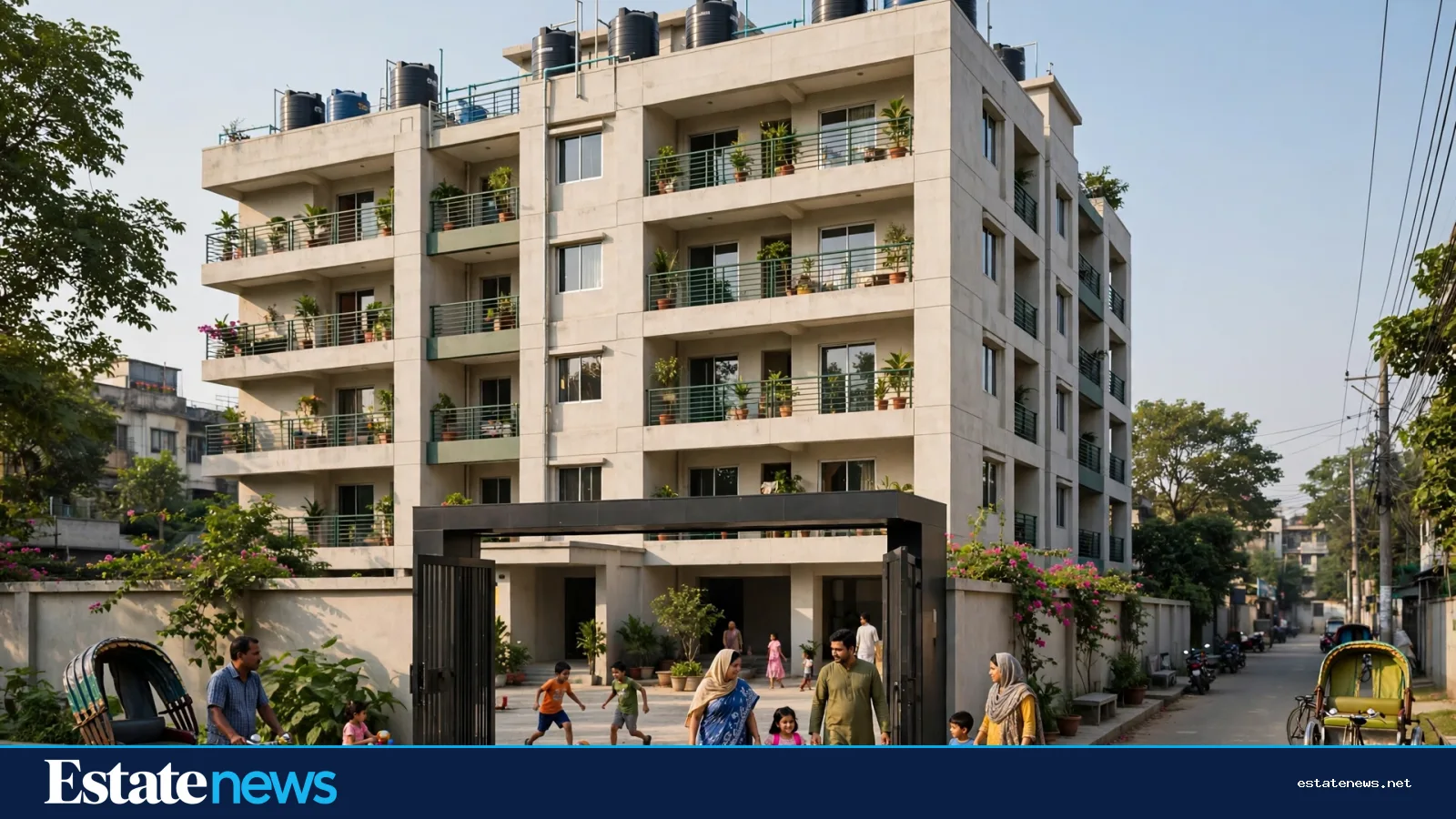
A range extender softens the charging problem, because the petrol generator tops up the battery on the road. It does not remove it. A flat owner still needs a place to plug in at home, and most Dhaka flats were never built for that.
The network as it stands

Bangladesh's public charging network is small and growing, and the numbers come from the operators themselves. CrackPlatoon Charging Solutions, one of the country's main operators, runs 32 public charging units, 241 private units and 335 residential installations, mostly in Dhaka and Chattogram, with additional coverage in Cumilla, Narayanganj and Gazipur, according to a report in The Business Standard. Around 30 public charging stations equipped to charge BYD vehicles have been set up across the country. Ekhon Charge, another operator, runs four charging points in Tejgaon, Cumilla, Chattogram and Cox's Bazar, and its Tejgaon station served three to four vehicles a day in 2026, against four to five a week in 2025.
The same report carries the warning that matters for a flat owner. Apartment dwellers can face restrictions on installing chargers and difficulties securing electrical connections, while drivers on highways need reliable charging facilities along their routes. The network is expanding, but the relatively small electric fleet makes it hard for operators to earn enough to justify the high upfront investment. A typical 120kW public charging station costs around Tk 70 lakh, according to CrackPlatoon's head of operations, with commercial payback generally taking five to seven years or longer.
The basement problem
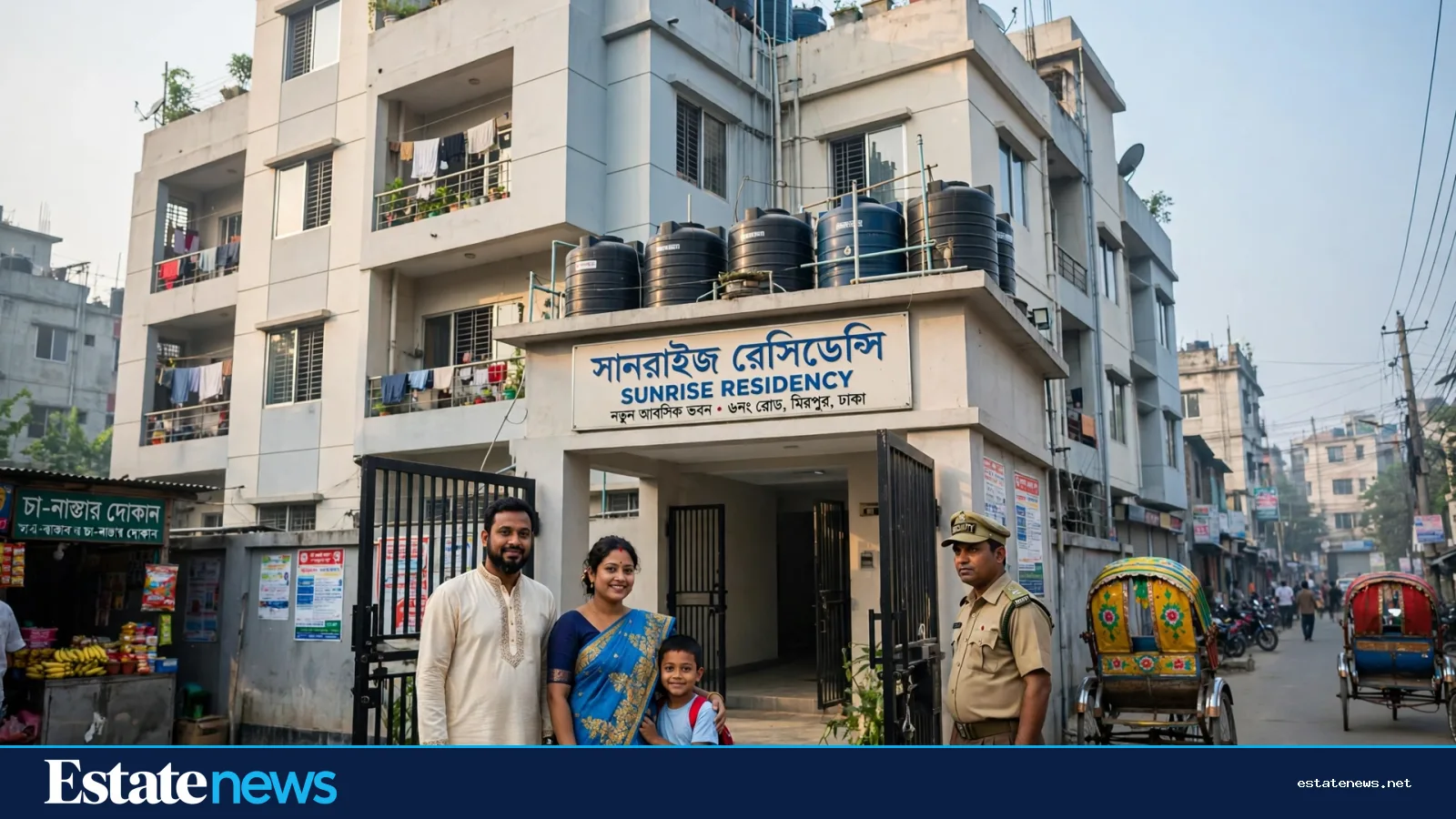
A Dhaka apartment building has a basement car park, a shared electricity meter and a management committee. None of those was designed with car charging in mind. A home charger draws power for hours, and the building's wiring, the load on the shared supply and the question of who pays for the electricity all need answers before a cable is run.
The practical route starts with the management committee, not with a purchase. Ask whether the building allows a charger in the basement, whether the shared supply has spare capacity, and how the electricity will be metered. Some buildings allow a plug point wired to the owner's own flat meter. Others prefer a shared charger with the cost split by use. A few say no, and that answer is worth knowing before the car is bought, not after.


A buyer in a new building has more room to negotiate. Ask the developer, before booking, whether the basement has charging provision, whether the electrical design allows a home charger, and whether the building's substation has spare capacity. In an older building, the answer depends on the wiring, and an electrician's survey is cheaper than a charger that cannot be switched on.
What charging at home looks like
Home charging comes in two shapes. A slow alternating-current charger, the kind Ekhon Charge lists for homes at 3.3kW to 7.4kW, plugs into a wall point and charges overnight. It is the simplest option for a flat owner, and it suits a car that sits in the basement for ten hours a night. A fast direct-current charger, 30kW to 60kW and above, charges in under an hour, but it belongs in a public station or a commercial building, not in a residential basement.
Rooftop solar changes the arithmetic for some buildings. Surplus power from a rooftop system is bought at Tk 10 a unit, and net metering pays Tk 10.50 a unit, according to reporting on the public-buildings solar programme, which Estate News covered in "Your Roof, Their Panels: The 10 Percent Free Power Deal for Public Buildings". A building with solar on the roof and a charger in the basement is still rare in Dhaka, but the pieces exist, and a management committee that plans both at once spends less than one that adds them separately.
Before you buy
No public tariff for charging has been published that a buyer can rely on, and no single count of stations covers the whole country, so this piece states no price for a charge and no national total. What is known is the shape of the network: a few dozen public units, a few hundred residential installations, and operators adding stations as the fleet grows.
A buyer should treat charging the way a buyer treats parking. Check it before paying. Ask the building committee in writing. Ask the dealer where the nearest public charger sits and whether it takes your car. Drive the route you actually use, home to office and back, and count the kilometres against the battery-only range. For the B10, 86 kilometres covers most Dhaka days. For the C10, 145 kilometres covers more. The generator covers the rest, but the generator is a backup, not a plan.
Dhaka's flats were built for petrol cars, and the city is learning to charge electric ones a building at a time. The car is ready. The plug point is the part to ask about before the keys change hands. Estate News tracks what a flat costs across the city in "Flat Price in Dhaka: What a Flat Costs Area by Area in 2026", and a charging point is now part of that cost, in money and in patience, for anyone buying electric.