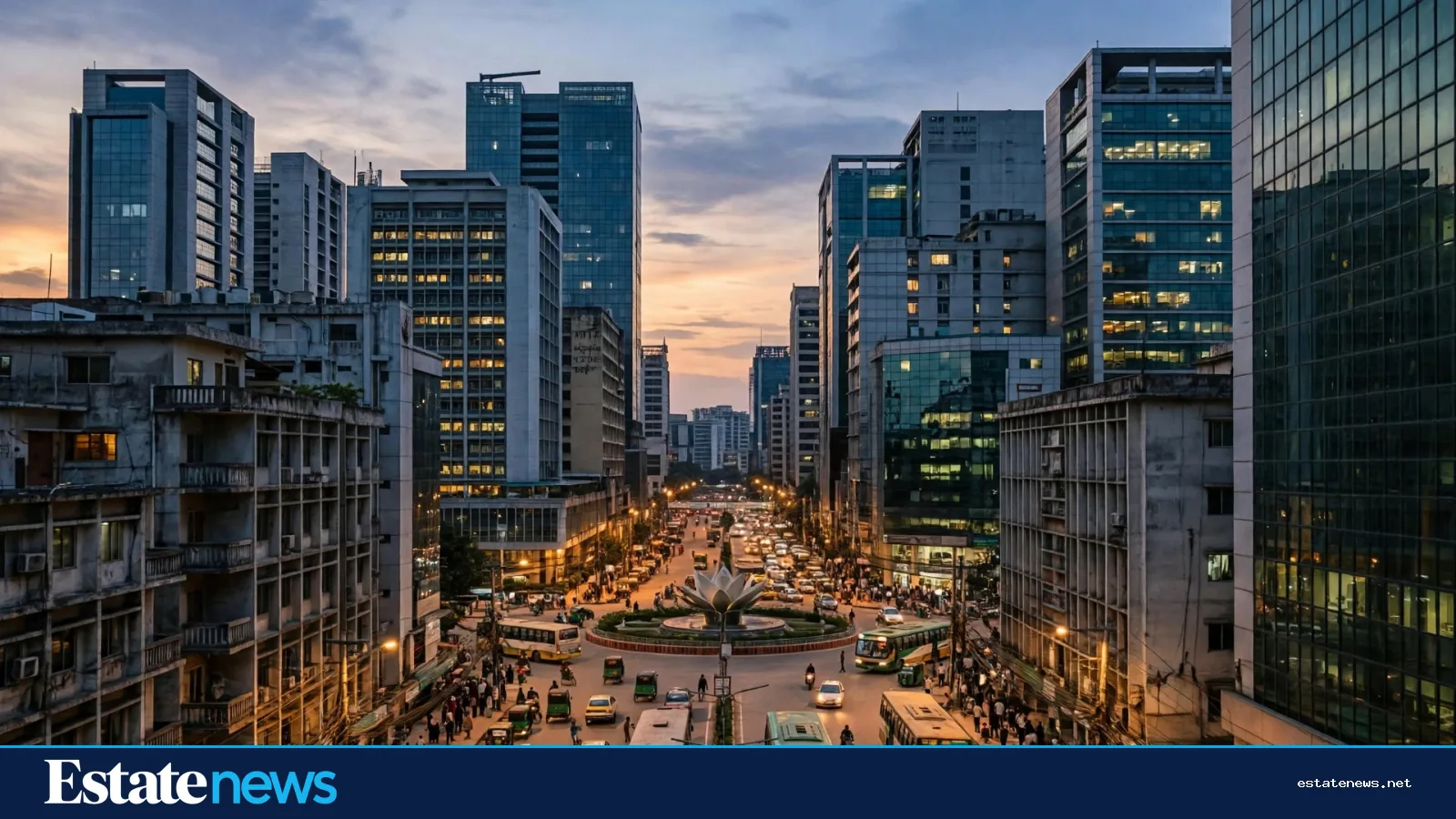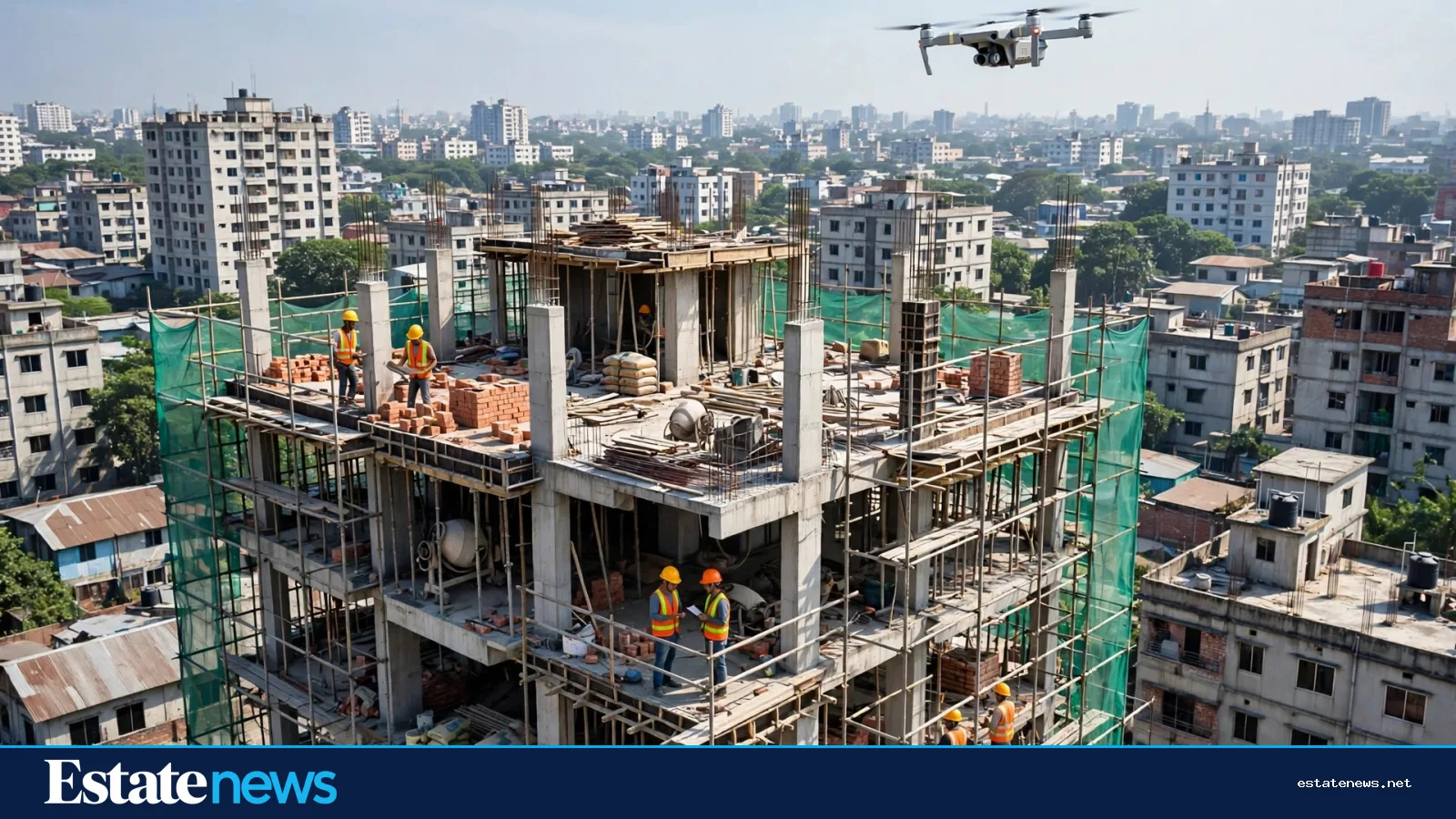
A home search in Dhaka used to begin with newspaper columns, a broker's notebook and a long afternoon of site visits. It still involves all three. What has changed is the layer in between: software that sorts listings, ranks neighbourhoods, estimates prices and answers questions before a buyer ever speaks to an agent.
For a first-time buyer, that can feel like progress. Type in a budget, a preferred area and a flat size, and an algorithm returns a shortlist in seconds. Ask for a price estimate and it returns a number, often to the taka. The danger is not that the tools are useless. It is that a precise-looking number can be mistaken for a precise fact.
What AI does well

The strongest use of artificial intelligence in property search is filtering, not judging. A good search tool can sift through far more listings than a person can, remove duplicates, flag listings whose photos, floor area and price do not match, and surface homes that fit a stated budget and commute.
It can also make comparisons easier. A buyer who wants to know how asking prices differ between, say, Mirpur and Uttara, or between a new building and a ten-year-old one, can see that pattern quickly. Used that way, the algorithm is a research assistant: it narrows the field so that human time is spent on the homes that matter.
Some tools go further and try to predict. They estimate a market value from past asking prices, building age, floor, facing and location, and they summarise an area in terms of schools, transport and amenities. Those features are genuinely helpful as orientation. They become risky only when they are read as conclusions.
Why an estimate is not a valuation
An automated estimate is, by definition, an estimate. It is a statistical guess built from the data the system has been given. In Dhaka, that data has important limits.
First, much of what is publicly visible is asking prices, not completed transaction prices. An asking price is what a seller hopes to receive. A transaction price is what a buyer actually paid. When a model is trained mainly on asking prices, its estimate will tend to reflect sellers' hopes more than buyers' reality, especially in a slow market where listings linger.
Second, the details that most affect a flat's value are often missing from a listing. Two flats in the same building can differ sharply in light, ventilation, water pressure, the condition of the lift, the quality of finishing and the reputation of the developer. A model that cannot see those things will price them as if they were the same.
Third, data can be thin or skewed. Newer areas have fewer past sales. Older buildings may have patchy records. If a neighbourhood has only a handful of listings, a small change in one listing can move the estimate for the whole area. That is not fraud; it is statistics working with too little information.
An algorithm can shorten a search. It cannot sign a deed, inspect a lift, or tell you whether the title is clean.
The risks buyers should watch


Bias is one risk. If a model learns mostly from listings in wealthier areas, or from a particular type of buyer, it can systematically overvalue some neighbourhoods and undervalue others. A buyer who follows the ranking blindly may pay more in a fashionable area or overlook a sound home elsewhere.
Stale and manipulated listings are another. Photos can be old, enhanced or taken from another project. A listing can remain online long after the flat is sold or withdrawn. An algorithm that ranks by clicks may promote the most eye-catching listing rather than the most honest one.
There is also the question of who benefits from the recommendation. A platform that earns fees from developers or agents may rank paying listings higher. That is not necessarily wrong, but it should be disclosed. A buyer should always ask whether a result is ranked by relevance, by payment, or by both.
Finally, there is privacy. Search tools learn from what a buyer clicks, saves and asks about. That information is valuable to advertisers and agents. Before sharing salary details, loan pre-approval figures or a precise home address with a chatbot, a buyer should check what the platform stores and shares.
The human checks that still matter
No algorithm replaces four checks that every Dhaka buyer should still make in person.
- Visit at different times of day. Check light, noise, traffic and water supply in the morning and the evening, not only at a staged viewing.
- Verify the documents. Ask for the deed chain, mutation record, approved plan and, for a new flat, the developer's handover history. An estimate says nothing about title.
- Inspect the building, not just the flat. Lifts, stairwells, parking, drainage and the condition of common areas reveal how a building will age.
- Get an independent price view. Compare the estimate with recent asking prices for genuinely similar flats, and ask a bank valuer or an experienced agent who has no stake in the sale what they think.
A useful question to ask any AI tool is also a simple one: what data did you use, and how recent is it? If the tool cannot answer, treat its number with extra caution. If it can show comparable listings and explain its reasoning, it deserves more weight — but still not the final word.
How to use AI well
The sensible approach is to let the machine do the sorting and let people do the judging. Use AI to build a long list, to spot price patterns and to prepare questions for a viewing. Then visit, verify and negotiate as if the algorithm did not exist.
Dhaka's housing market rewards that discipline. Prices are negotiated, not fixed. Buildings vary enormously in quality. And the cost of a mistake — buying the wrong flat, in the wrong building, at the wrong price — lasts for years. An algorithm that saves a buyer a week of searching is valuable. An algorithm that persuades a buyer to skip verification is not.
Used with scepticism, AI is a welcome addition to the Dhaka home search. It makes the first stage faster and more transparent. It does not, however, remove the need for the oldest tools in property buying: eyes, documents and independent advice. This article is informational only and is not financial advice.
Follow Estate News on Facebook for daily property, market and money updates: https://www.facebook.com/profile.php?id=61593817347872