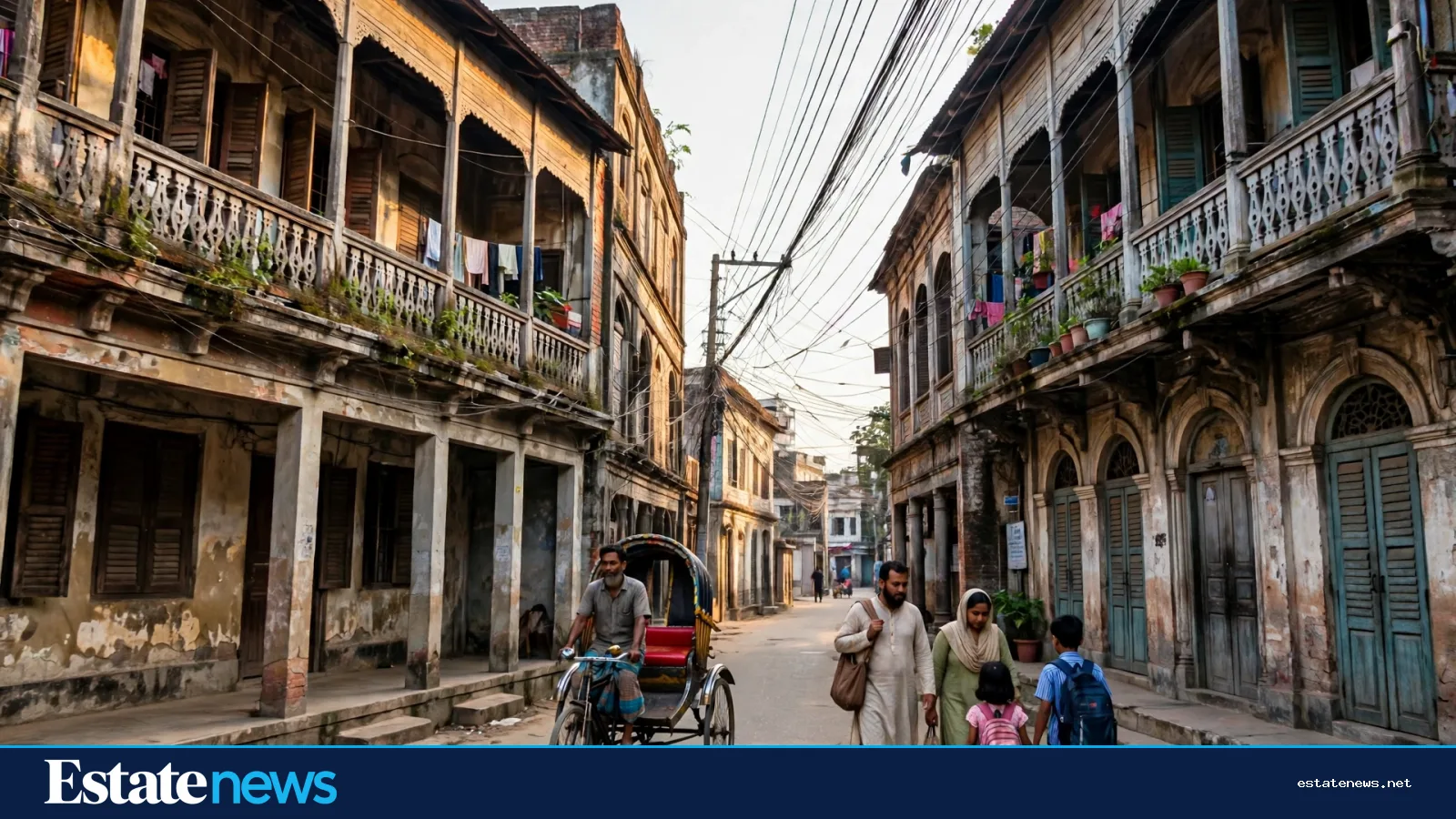
Rankin Street runs straight and narrow through Wari, and walking it is the fastest way to understand what Old Dhaka was meant to be. The houses stand close to the road, two storeys high, with verandas, shuttered windows and carved wooden balconies that have survived a century of weather and rebuilding. A rickshaw passes, a family walks home from school, and the tangled wires overhead are the only thing that feels hurried.
Wari is Dhaka's first planned residential area. In 1880, fourteen years after the Dhaka Municipality was set up, the British administration acquired 701 acres of land here to build housing for government officials. Each plot was originally one bigha, though some ran to two. Over the next five years the area was laid out as a planned township, with a grid of roads about 30 feet wide running north to south and east to west. The streets took the names of British officials of the time: Rankin Street, Larmini Street, Ware Street and Hare Street.
The street of doctors, lawyers and judges

Rankin Street was the address of Dhaka's professional class. Prothom Alo's account of the area names the people who lived there: Dr Manmath Nath Nandi, advocate Sabita Ranjan Pal, politician Shudhangshu Shekhar Halder and Justice Debesh Bhattacharya, among others. House number 37 on Rankin Street stood on a two-bigha plot, and in the Pakistan period it was the home of Bhobesh Chandra Nandi, a member of the Pakistan Constituent Assembly. The house later passed to the physician Manmath Nath Nandi, and local memory still calls it Nandi Daktar Bari.
The street's other houses carry their own histories. Number 38 is known locally as the Dholla zamindar house. Kabitangon, further along the street, was for years the home of Justice Nurul Islam and the poet Jahanara Arzoo. These were not grand palaces. They were solid, well-built family houses with gardens and verandas, and that was the point. Wari was planned for people who worked in the city and wanted a quiet street to come home to.
What Wari looks like now


Present-day Wari covers Tipu Sultan Road, Rankin Street, Larmini Street, Nawab Street, Hare Street, Ware Street, Juginagar Lane and Joykali Mandir Road, and falls under Ward 41 of the Dhaka South City Corporation. The Baldha Garden, one of the oldest botanical gardens in this part of Bengal, still stands in the area. Much else has changed. Rankin Street now carries shops and offices alongside the houses, and several old plots hold multi-storey commercial buildings, including the AK Famous Tower on plot 42, home to retail brands like Aarong and Bishwo Rang.
That change has been fought over. The High Court has directed the authorities to stop construction of commercial structures in the residential area on Rankin Street, after a writ petition by a resident, Supreme Court lawyer Sakina Begum. The petition named four developer companies building commercial structures in the area. The order is a reminder that Wari's plan still has legal force, and that a residential plot here is not a commercial one, whatever a builder may claim.
Buying in Wari
A buyer in Wari is buying history as much as a flat. Old houses come with old papers, and the chain of title needs the same care as anywhere in Old Dhaka. Check the deed and the mutation, and check whether the building approval matches what stands on the plot. A house that was divided, like number 37 Rankin Street, now split into holdings 37 and 37/1, needs the division papers in order too. Ask whether the plot is residential under the plan, and whether any commercial use on it has approval. Estate News explained the documents that matter in "How to Verify a Land Title in Bangladesh: The Documents That Matter", and the registration cost that follows a purchase in "Flat Registration Cost in Bangladesh: A Buyer's Guide for 2026".
Wari's value is not in its prices, which this piece does not state, because no verified area figure was available. Its value is in the street itself: a planned neighbourhood from the 1880s that still works as one, with schools, shops and the old garden within walking distance. The houses that survive are a record of how Dhaka once built for its middle class, on one-bigha plots, along straight roads, with room for a veranda and a tree. Estate News told the story of another Old Dhaka landmark in "Bara Katra: The Mughal Inn That Gave Old Dhaka Free Rooms for Travellers", and compared two ways of living in the city in "Dhanmondi or Bashundhara: Two Ways to Live in Dhaka". Wari offers a third way, older than either, and still standing.