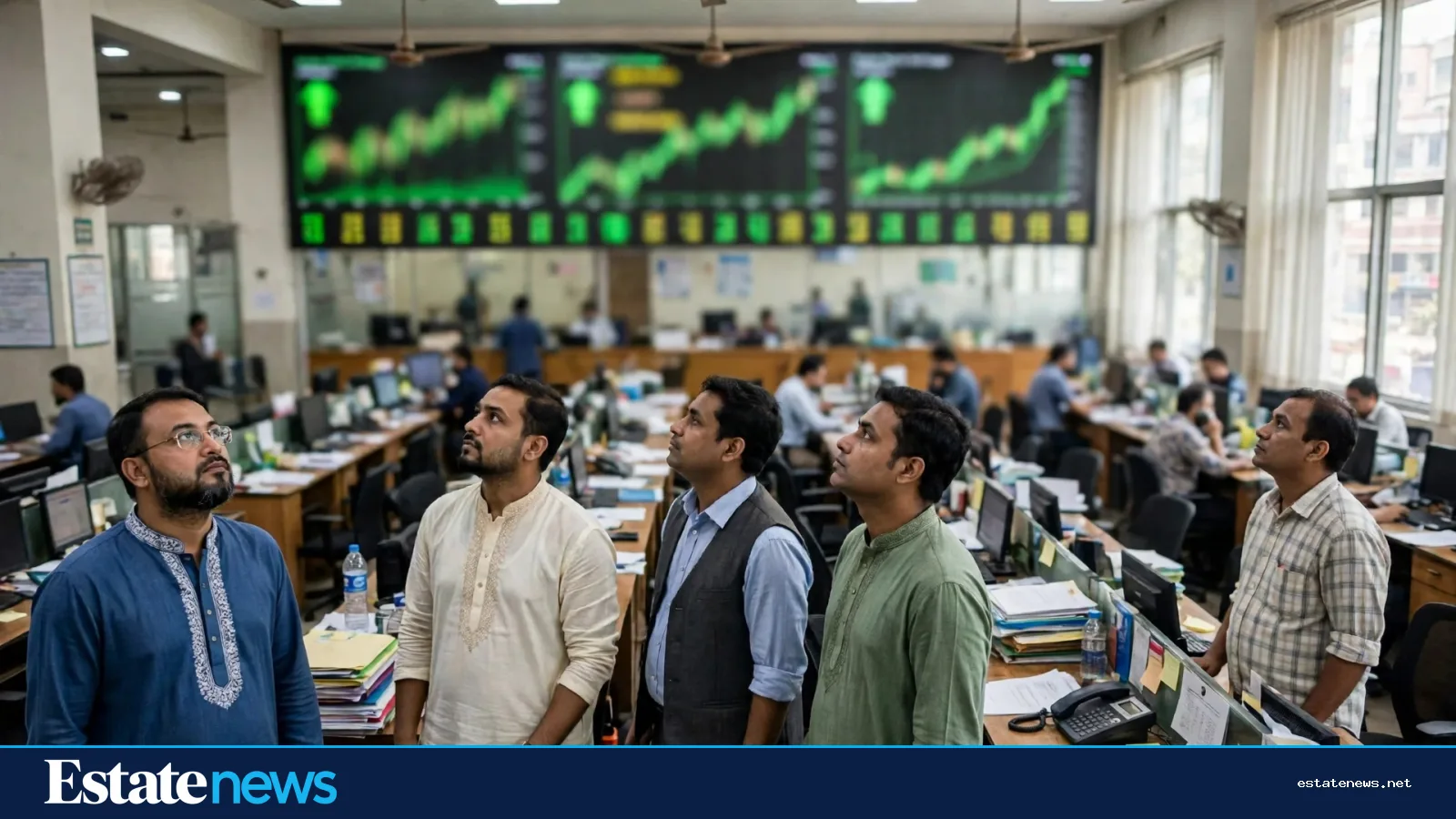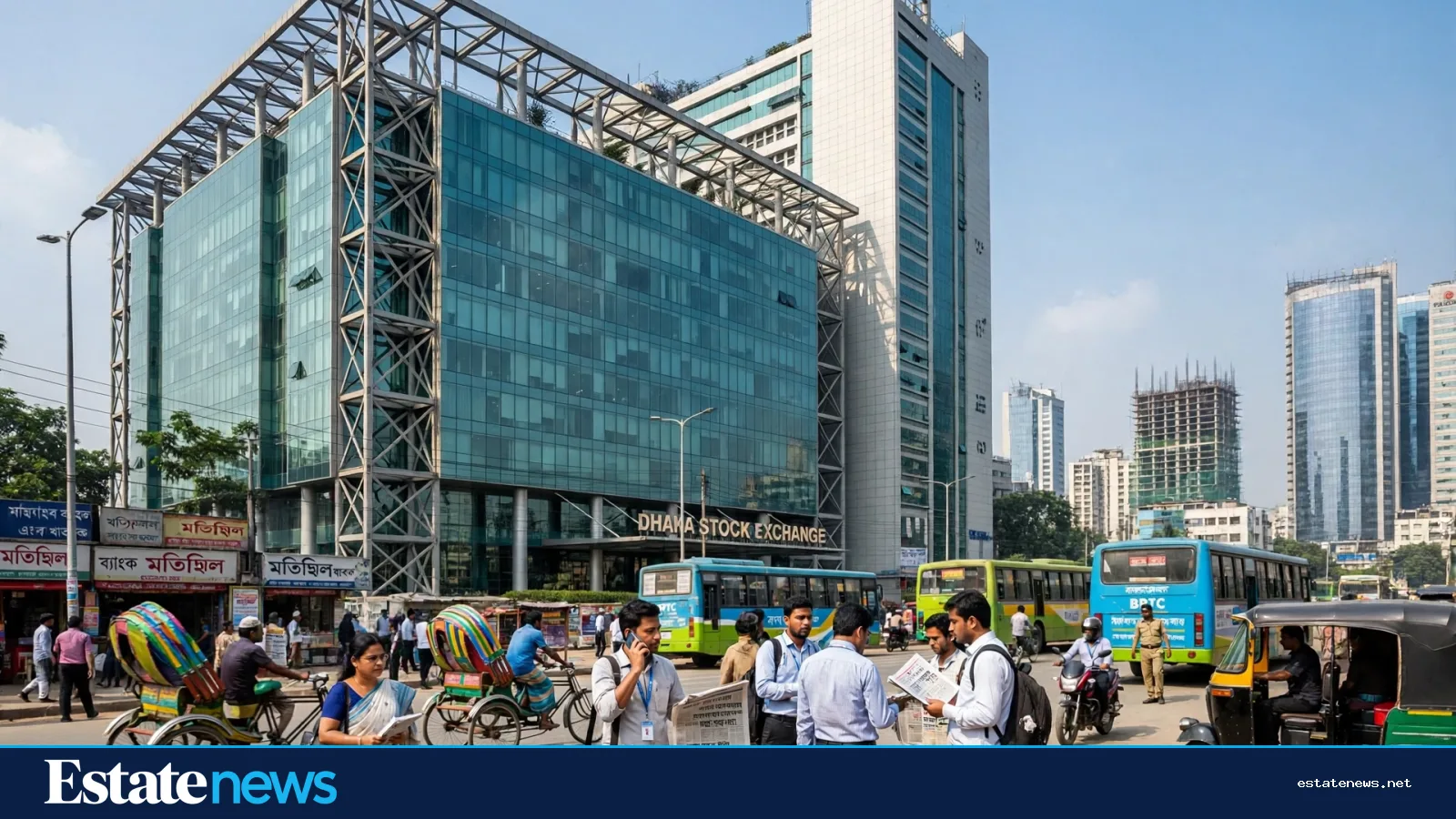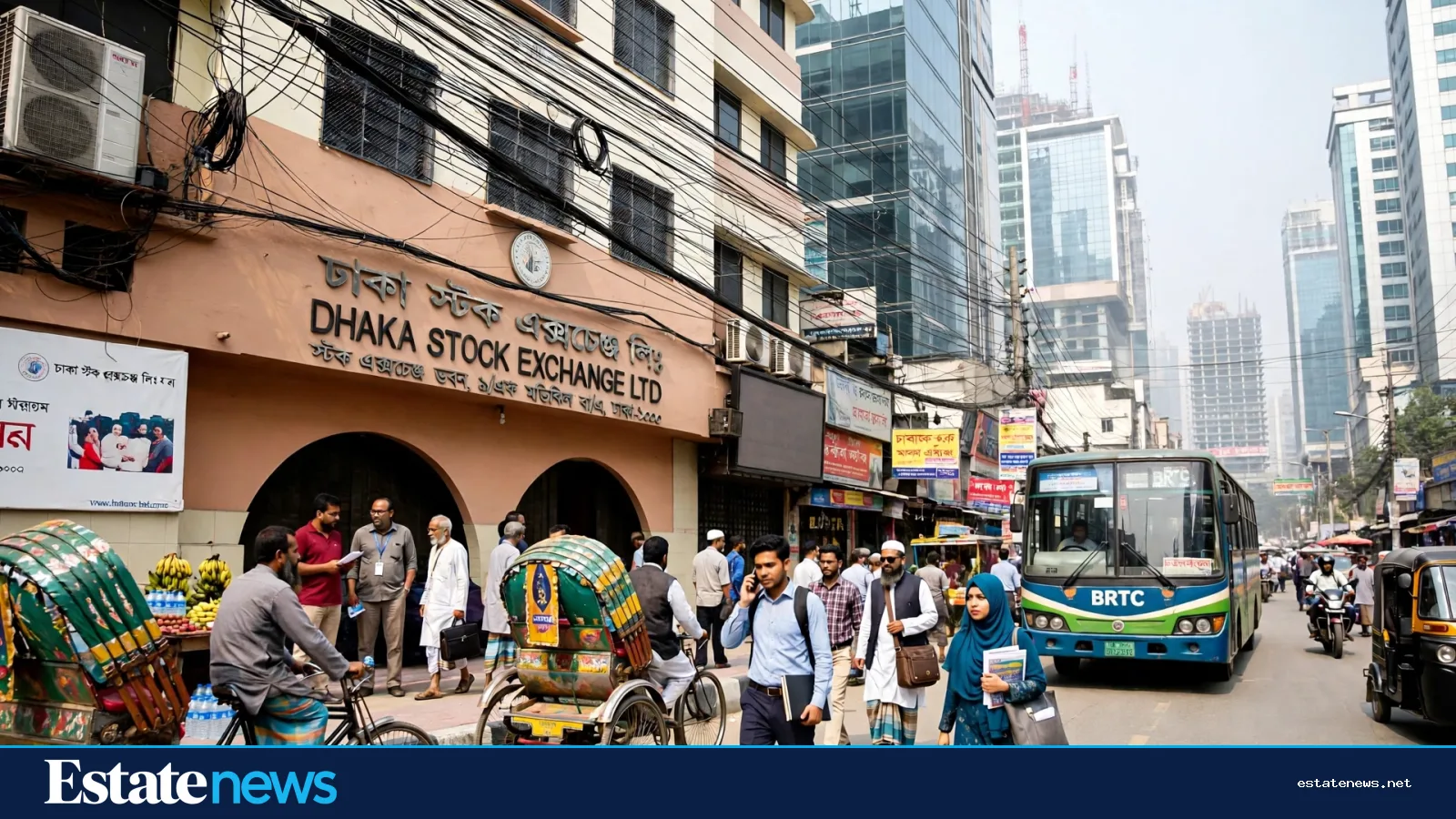
Dhaka Stock Exchange made a profit of Tk 45 crore in the financial year to June 2026, up 45 percent from Tk 31 crore the year before. The board has recommended a 2.50 percent cash dividend, or Tk 0.25 per share, up from 1.70 percent in FY25. On the face of it, the exchange that runs the country's share market had a good year. The detail underneath is less comfortable: the exchange lost money on its core trading business, and stayed profitable on interest from bank deposits, income from bond investments and rent.
The figures come from the exchange's own disclosures, reported by The Business Standard. Earnings per share rose to Tk 0.25 in FY26 from Tk 0.173 in FY25. Net asset value per share stood at Tk 10.52 at the end of June, while net operating cash flow per share was negative Tk 0.012. Shareholders will consider the proposed dividend and the audited financial statements at the annual general meeting, scheduled for 6pm on 21 December at DSE Tower in Nikunja. The dividend is recommended, not paid: the meeting must approve it first.
Where the money came from

The exchange has yet to publish its full audited financial report for FY26, but exchange sources told The Business Standard that it incurred operating losses during the year and remained profitable on non-operating income. Interest income from fixed deposit receipts and bond investments generated around Tk 100 crore, while rental income contributed more than Tk 10 crore. Those two streams, not trading, kept the exchange in profit.
Its core revenue stayed under pressure all year. Share transaction fees, listing charges, data sales, licensing fees and the training academy's earnings all depend on a busy, confident market, and the market was neither for much of the year. Political instability and macroeconomic challenges kept trading volumes thin and listings slow, and the exchange's own business felt the same chill its listed companies did. The market's thin trading is visible in the daily numbers: turnover on Thursday 26 November was Tk 707 crore, down 23 percent, as the DSEX slipped 6.94 points, as reported in "DSEX Slips 6.94 Points as Turnover Falls 23% to Tk 707 Crore".
A profit, but below the peaks


The 45 percent rise flatters the result. Profit in FY26 is still far below the exchange's previous peaks. Net profit stood at Tk 116 crore in FY21, Tk 125 crore in FY22, Tk 81 crore in FY23 and Tk 61 crore in FY24, before falling to Tk 31 crore in FY25 and recovering partly this year. The exchange is earning less than half of what it made four years ago, and the composition of the profit has changed with it. In the strong years, trading fees did the work. Now deposits and rent do.
There is a wider point here for anyone who owns shares, or is thinking about it. The DSEX gained 924 points, or 19 percent, to 5,762 by 30 June, the FY26 close, and the DS30 rose 363 points, or 20 percent, to 2,178. The index rose while the exchange's own trading business lost money, which says something about the kind of market it has been: prices up, but activity thin, with few new listings and cautious volumes. A rising index and a quiet trading floor can sit side by side, and this year they did.
What to watch at the AGM
The December meeting will be the moment shareholders can ask the question the numbers raise. What is the plan to earn money from the market itself again, rather than from deposits and rent? More listings, deeper trading, better data sales and a livelier training business are the levers the exchange has, and all of them depend on the market regaining the confidence that has been missing. Until then, the exchange remains a landlord and a depositor that also runs a stock market.
The week's market news, including the tariff picture and the Terminal 3 deal, is gathered in "Bangladesh Market Wrap, 27 November: Tariffs, Terminal 3, the Thin Market". For savers weighing where to put money while the market stays thin, the central bank's small-borrower fund is explained in "Bangladesh Banks' Tk 1,500 Crore Fund: Who Can Borrow and at What Rate". This article is not financial advice, and the dividend it reports is a board recommendation awaiting shareholder approval.