The skeleton of every building
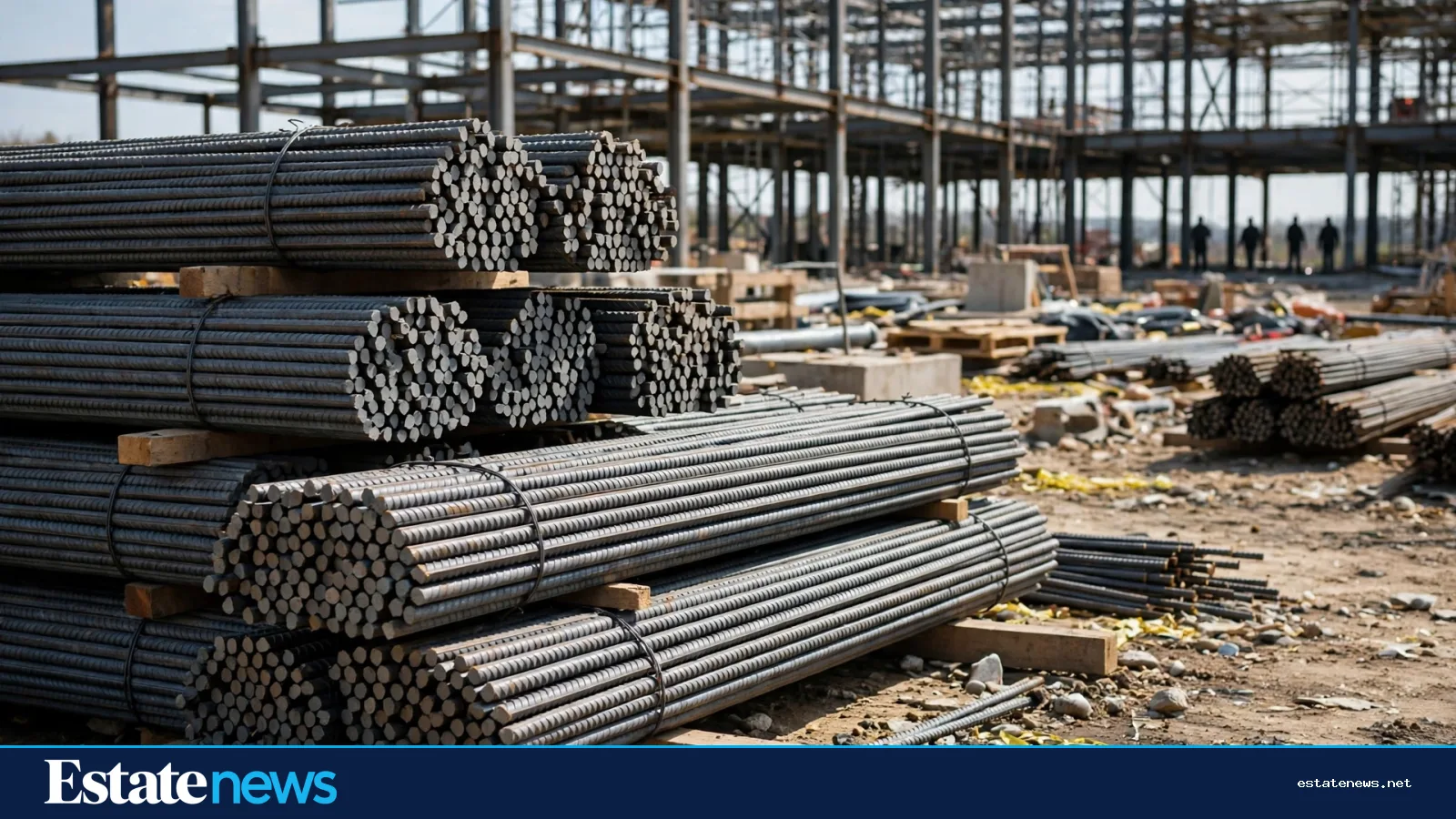
Every reinforced building in Bangladesh, from a family house to a high-rise tower, depends on steel reinforcement — rod — for its strength. Concrete carries compression; steel carries tension. Without rod, there is no modern multi-storey building. That is why rod prices matter far beyond the steel industry itself. They flow directly into construction budgets, into flat prices, and into the decisions families and developers make about when and what to build.
Bangladesh's steel industry is anchored by major re-rolling mills and producers including BSRM, KSRM, GPH Ispat and RSRM, alongside other mills. Together, they supply much of the rod used across the country's housing, commercial and infrastructure construction. This article does not claim any company's production, sales or financial figures, which are not stated here. It explains, in general terms, how rod prices are formed, why they move, and what builders and homebuilders should do about that movement.

A planning number, clearly labelled
Estate News' tracker records a published-range midpoint for rod of Tk97,000 per tonne. That figure should be understood precisely for what it is: the midpoint of a published price range, offered as a planning indicator. It is not a single company's quoted price, not a guaranteed price, and not a forecast. Actual prices vary by brand, grade, quantity, location and timing, and any builder should confirm current quotations before committing a budget.
Used correctly, however, a midpoint is useful. It lets a builder or a family sense-check a budget: if a project needs a certain tonnage of rod — an illustrative figure, to be calculated properly for the actual design — then multiplying that tonnage by the midpoint gives a rough sense of scale. If the price moves by a few thousand taka per tonne, the effect on the total is immediately visible. That discipline — testing a budget against a range, not a single hopeful number — is the difference between a plan and a guess.
Why rod prices move: scrap, freight and the exchange rate
Rod prices move for reasons that often begin far from a Dhaka construction site. The first is scrap. Much steel production depends on scrap metal, whose price moves with global demand, supply and trading conditions. When scrap becomes more expensive, the cost of producing rod rises, and that pressure eventually reaches local prices.
The second is freight. Steel inputs and finished products travel by ship and by road, and freight costs can rise sharply when shipping capacity tightens, fuel prices rise, or routes are disrupted. A builder in Dhaka may never see a ship, but the cost of moving steel to Bangladesh is part of the price paid at the site.
The third is the exchange rate. Where inputs are imported or priced in foreign currency, a weaker taka raises the local-currency cost of those inputs, even if the foreign-currency price has not changed. Exchange-rate movement therefore acts as a multiplier on other cost pressures, amplifying them when the currency weakens and easing them when it strengthens.
Energy costs, domestic demand and competition among mills also play a part, in general terms. When construction demand is strong, mills operate at higher levels and pricing power shifts; when demand cools, competition can restrain prices. None of these forces acts alone. Rod prices are the combined result of all of them, which is why they can move even when local construction conditions appear unchanged.


What it means for construction budgets
For developers, rod price movement creates a timing and contracting problem. A project priced at one rod price may be built at another. Developers manage this, in general, by allowing for price ranges in budgets, by agreeing supply arrangements in advance where possible, and by reviewing budgets as construction proceeds rather than fixing every assumption at the start. Buyers should understand that this uncertainty is a normal part of construction economics, not necessarily a sign of mismanagement.
For families building their own homes, the implication is more personal. Rod is typically one of the largest material costs in a house, so a price rise can force difficult choices: delaying a stage, reducing scope, or finding additional funds. The practical protections are straightforward. Obtain current quotations from more than one supplier. Agree the grade and quantity in writing. Keep a contingency in the budget for material price movement. And be wary of any quotation that is far below the prevailing range without a clear explanation — it may reflect a different grade, a different quantity, or terms that will change.
The wider context: rates, inflation and building
Rod prices do not move in isolation from the wider economy. With the policy rate at 9.5 per cent, borrowing for construction remains expensive, which affects both developers and families. With September inflation at 8.34 per cent, household budgets are already under pressure, making any additional construction cost increase harder to absorb. These are not steel-industry figures; they are the economic conditions within which steel is bought and buildings are built.
That context explains why material prices attract such attention. In a period of expensive borrowing and elevated inflation, a rise in rod or cement prices does not merely add to a budget — it can delay a project, change its scope, or push a family to wait. Conversely, a period of stable material prices gives builders confidence to plan and families confidence to commit. Stability, as much as low prices, is what construction needs.
Building with the number, not against it
The right way to use a figure like Tk97,000 per tonne is as a starting point for questions, not as an answer. What is the current quotation for the grade this project needs? How much rod does the design actually require? What happens to the budget if the price moves by five per cent in either direction? What contingency is held for that movement? A builder or family that can answer those questions has a budget that can survive contact with reality.
Bangladesh's steel industry, led by names such as BSRM, KSRM, GPH Ispat and RSRM, will remain central to the country's building story. Its prices will continue to move with scrap, freight and exchange rates that no single builder controls. The skill lies not in predicting those movements, but in planning for them — with ranges, quotations and contingencies, rather than with a single number assumed to hold until the last rod is laid.
This article is informational only and is not financial advice. Construction budgets should be prepared with qualified professionals and confirmed supplier quotations for the specific project.
Follow Estate News on Facebook for daily property, market and money updates: https://www.facebook.com/profile.php?id=61593817347872