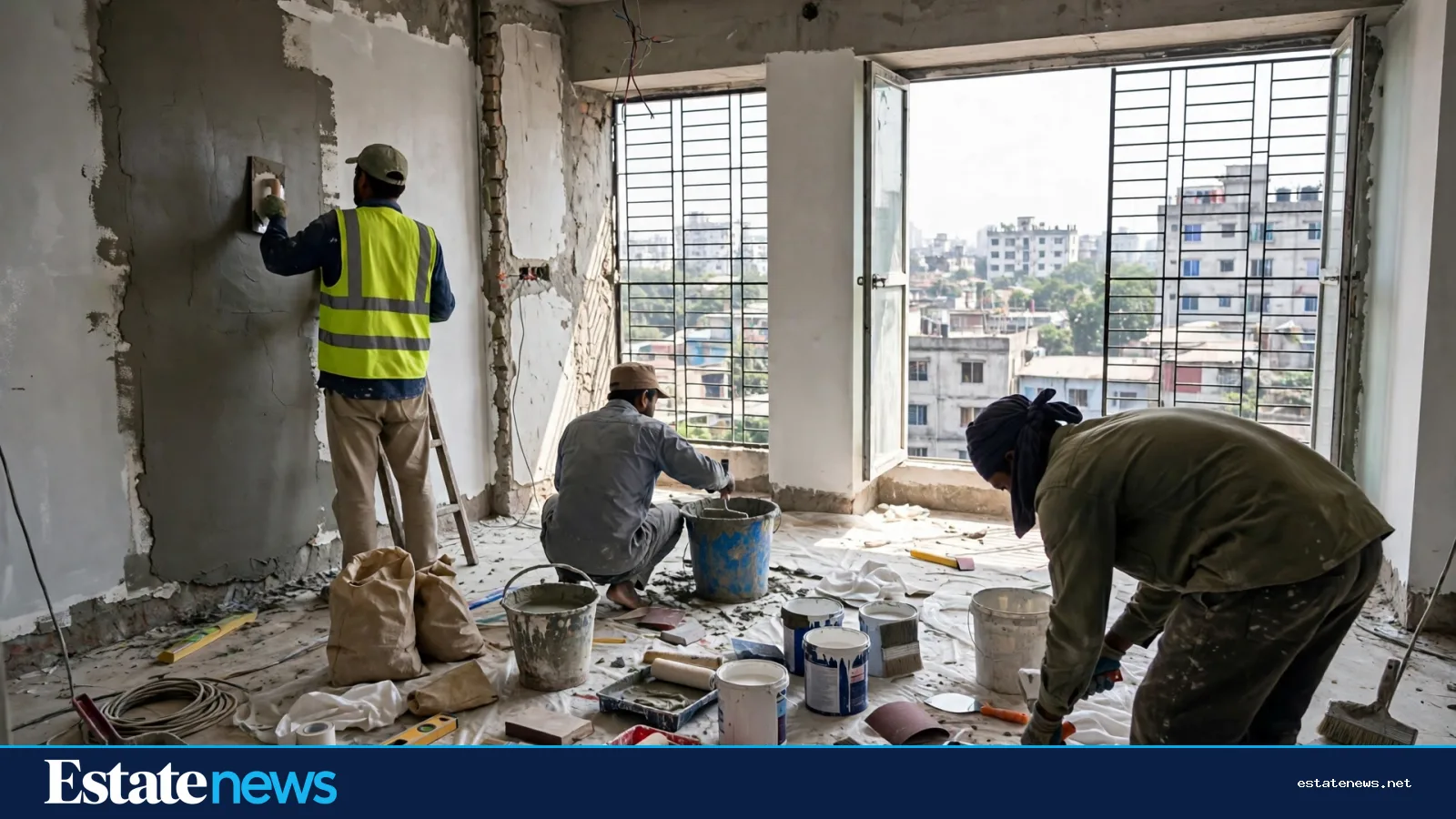
Renovation is where good flats go to eat their owners' savings. The work starts with a leaking bathroom or a tired kitchen, and somehow ends with a new ceiling, imported tiles and a bill twice the original estimate. The fault is rarely the contractor alone. It is the absence of a plan that ranks spending by importance rather than by visibility. A renovation budget is not a list of nice things. It is a sequence of decisions, and the sequence matters more than any single choice.
The first rule is unglamorous: fix what protects the flat before improving what decorates it. Structure comes first — cracks, damp patches, sagging ceilings and any sign of water ingress. Waterproofing comes with it, especially in bathrooms, balconies and around windows, because water damage spreads silently and ruins finishes that were installed over an unresolved leak. Electrical and plumbing systems come next. Old wiring, overloaded circuits, corroded pipes and weak water pressure are not cosmetic issues; they are safety and habitability issues, and they are far cheaper to fix before new tiles and cabinets hide them.
Only after those foundations are sound should the budget move to rooms. And even then, order matters. Kitchens and bathrooms absorb the most money and deliver the most daily value, because they are used constantly and their fittings wear fastest. A kitchen renovation should start with layout and storage — where things go, how the work triangle functions, whether there is enough counter space — before it reaches finishes. A bathroom renovation should start with waterproofing, drainage and ventilation, and only then with tiles and fittings. Bedrooms and living areas, by contrast, are often transformed by paint, lighting and storage rather than by structural work, and they are where restraint saves the most money.

Room by room: where to spend, where to save
In the kitchen, spend on durability: cabinet carcasses that survive humidity, hinges and runners that will be used thousands of times, and a countertop that resists heat and stains. Save on fashionable fronts and handles, which can be changed later without rebuilding the kitchen. In the bathroom, spend on waterproofing, quality taps and a reliable water heater; save on statement tiles, which date quickly and cost disproportionately. In bedrooms, spend on storage that fits the room and on lighting that works at different times of day; save on feature walls that add little to daily life. In living areas, spend on light — larger windows where the structure allows, lighter paint, layered lighting — and on flexible furniture that suits a flat that may need to change use over time.
Balconies and rooftops deserve a note of their own. Dhaka flats increasingly treat balconies as extra rooms, and that is understandable in a dense city. But balcony work must respect drainage, waterproofing and the building's rules. A balcony converted without proper drainage becomes a damp problem for the flat below as well as the owner. Check with building management before enclosing or heavily loading a balcony, and keep the work reversible where possible.
The contingency fund is not optional
Every experienced renovator will say the same thing: something unexpected will be found once work starts. A wall opened for rewiring reveals damaged brickwork. A bathroom floor lifted for retiling reveals a leaking pipe. A budget without a contingency fund treats these discoveries as crises; a budget with one treats them as routine. As a general planning principle, setting aside a contingency portion of the total budget — held separately and spent only on genuinely unforeseen work — prevents the most common renovation failure: running out of money with the flat half-finished. The exact proportion depends on the flat's age and condition; older flats and flats with visible damp merit a larger reserve than newer ones. No specific percentage is prescribed here, because the right reserve depends on a survey of the actual flat.


A related discipline is to separate "must-do" from "nice-to-do" in writing before work begins. Must-do items are the structural, waterproofing, electrical and plumbing works, plus anything required for safety. Nice-to-do items are finishes, upgrades and aesthetic changes. If costs overrun — and they usually do — the nice-to-do list is where savings come from, not the must-do list. Homeowners who blur the two end up cutting waterproofing to afford a nicer kitchen counter, and pay for that choice for years.
Contractor checks before a single wall is touched
Choosing a contractor deserves as much care as choosing materials. Ask for recent completed work you can visit, not just photographs. Ask for a written quotation that itemises labour and materials separately, states the brands or specifications where they matter, and sets a payment schedule tied to completed stages rather than to calendar dates. Be wary of a contractor who demands a large advance before work starts, who cannot explain the sequence of work, or who discourages a written agreement. Get the timeline in writing, including what happens if work is delayed, and agree in advance how changes will be priced — because changes are where budgets most often unravel.
Supervision is part of the budget too, whether it is the owner's time or a professional's fee. Visiting the site regularly, photographing progress, and checking work before it is covered up — waterproofing before tiling, wiring before plastering — catches errors while they are still cheap to fix. The most expensive renovation mistake is discovering a fault after the finish has hidden it.
Finally, keep the building in mind. Renovation work affects neighbours: noise, dust, debris and shared services. Inform building management, agree working hours, protect common areas, and dispose of debris properly. A renovation that respects the building is also one that avoids disputes, fines and damaged relationships with the people who share the owner's walls.
A renovated flat should feel better to live in, not just look better in photographs. That happens when the budget follows a simple order: protect first, fix the systems, then improve the rooms — and keep something in reserve for the surprise that every old flat is hiding.
Follow Estate News on Facebook for daily property, market and money updates: https://www.facebook.com/profile.php?id=61593817347872