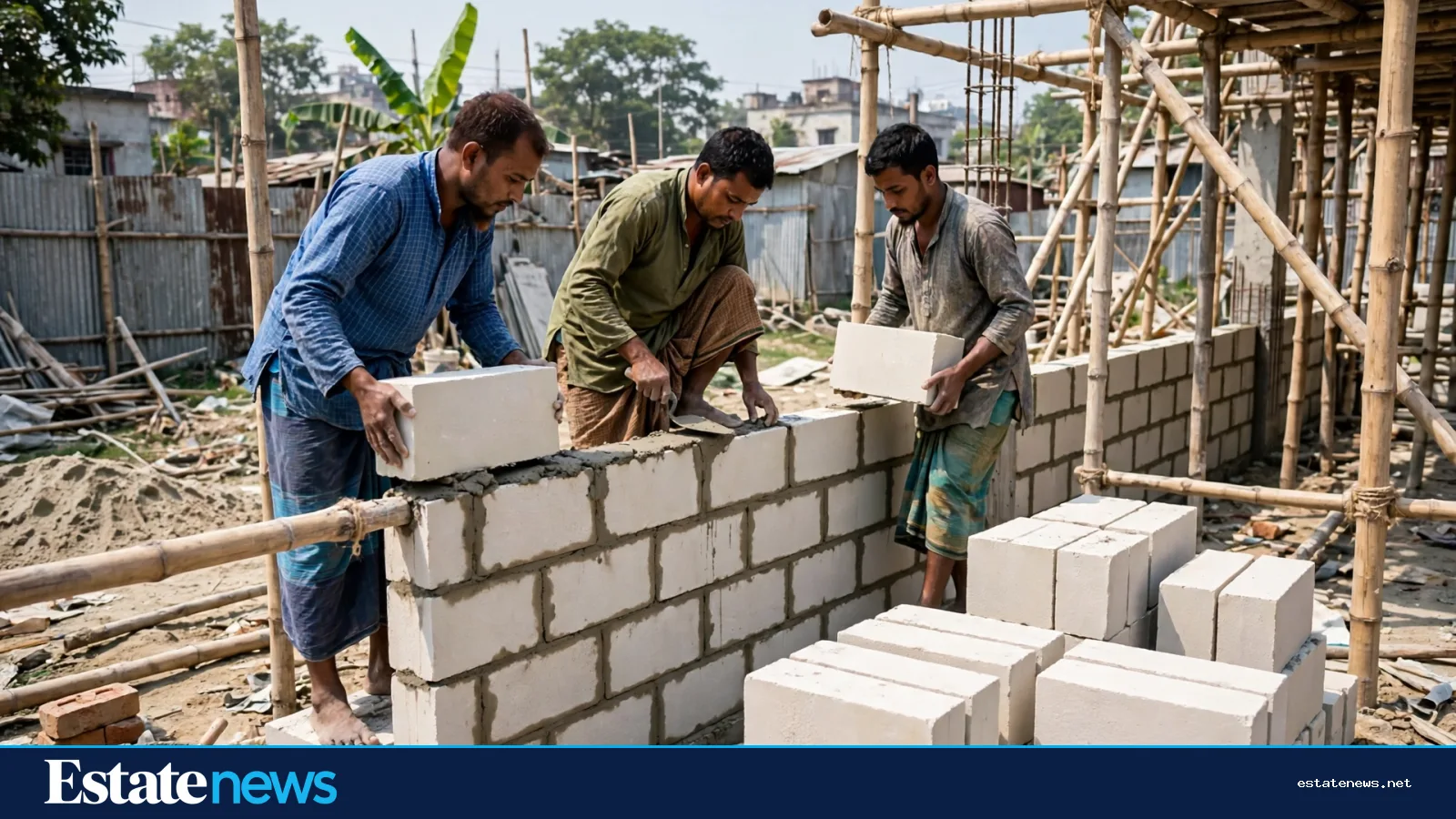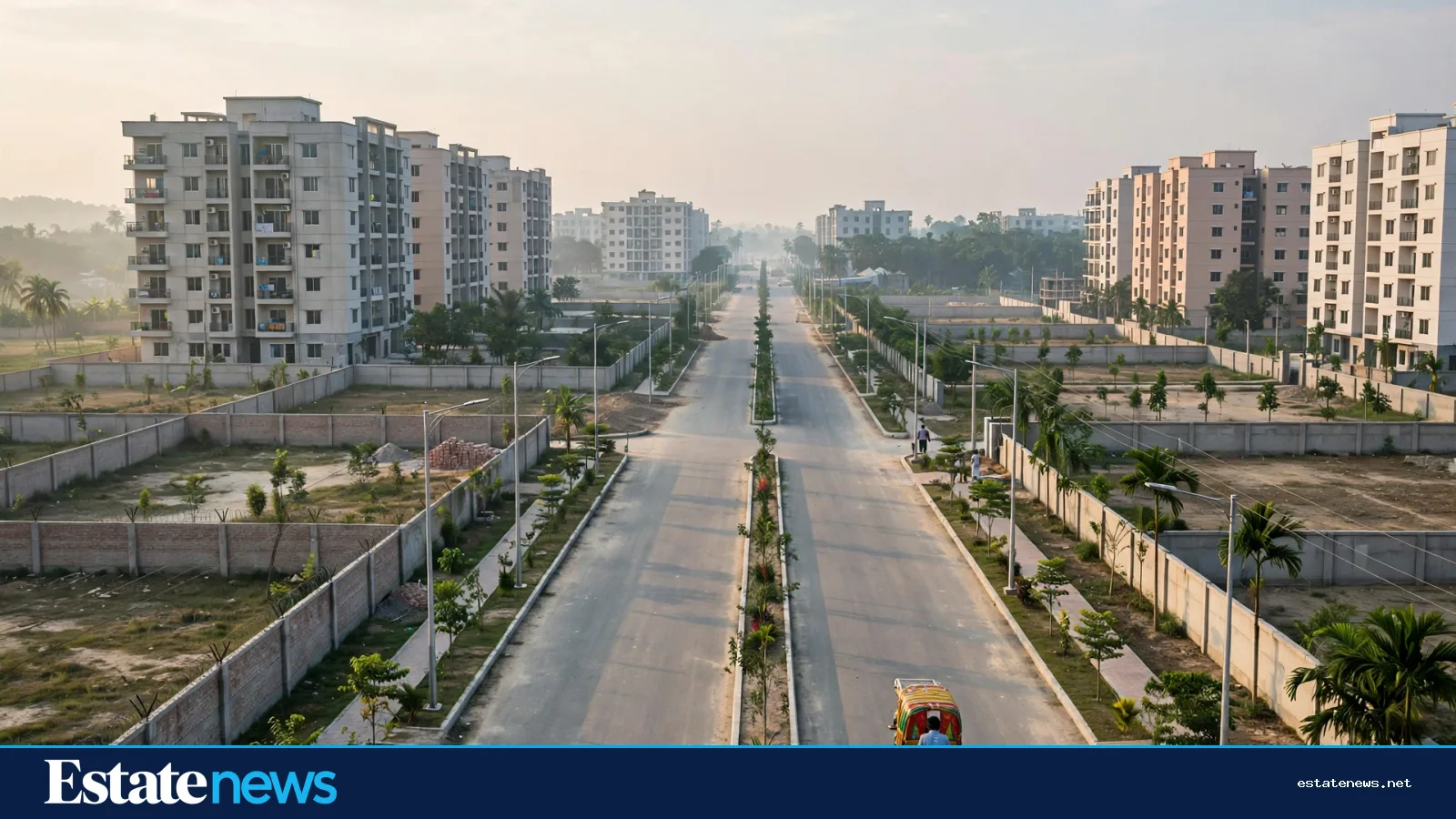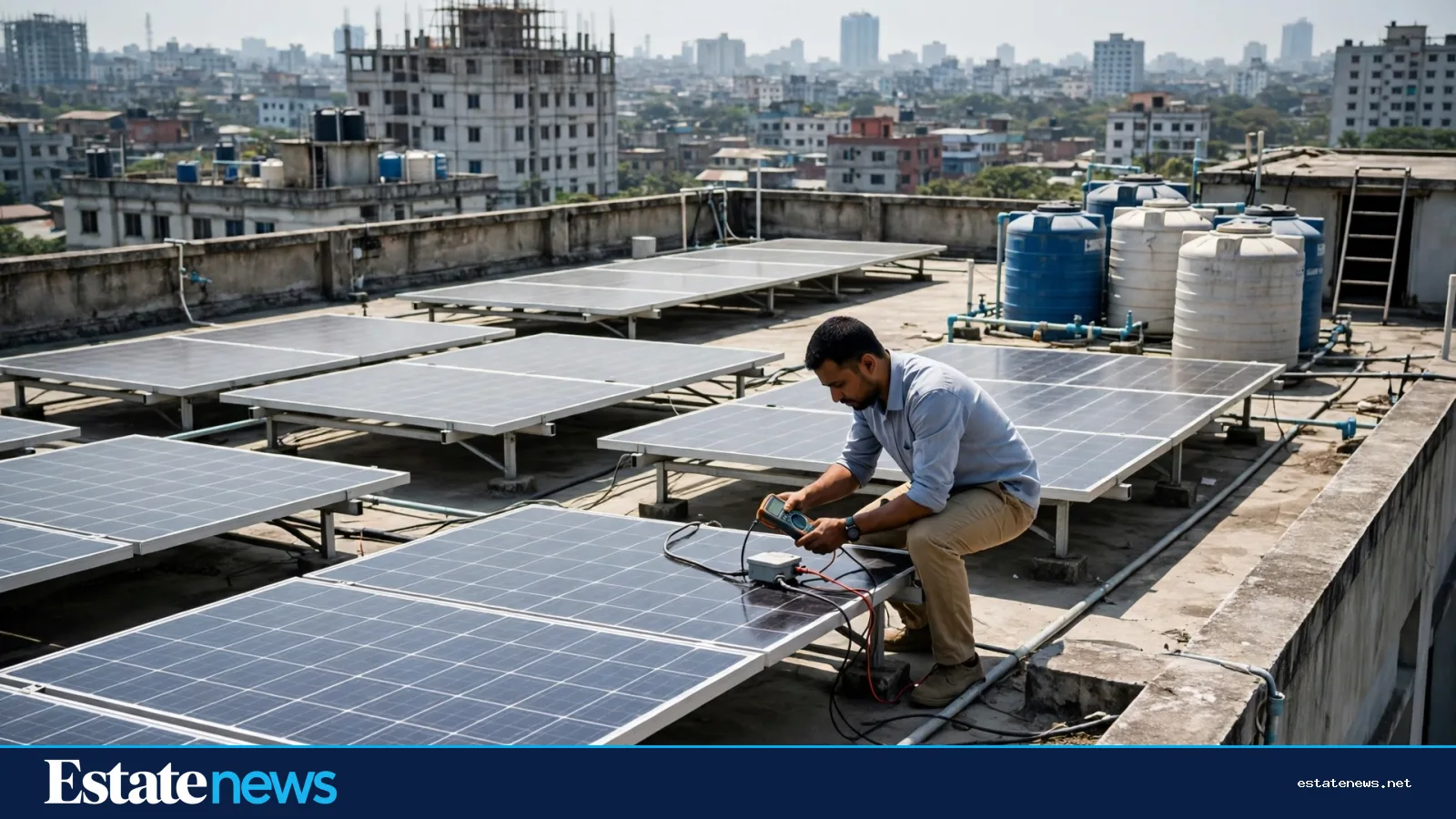
The roof of a government school, a hospital or a district office has always been dead space: concrete, a water tank, a washing line, and heat. Under a draft policy from the Power Division, that roof becomes an asset. A private company puts up the panels, pays for them, looks after them for 15 years, and the institution underneath gets a tenth of the electricity free.
The Business Standard reported the draft on 22 November. Public institutions will receive 10 percent of the electricity generated from rooftop solar panels on their buildings free of charge as "roof rent", while private investors keep the remaining 90 percent to sell back to the host office or to the national grid. If a host institution uses more than its free 10 percent share, it buys the extra solar power from the private operator at a 20 percent discount on the applicable government-approved retail tariff.
How the money works

The arithmetic is set out in the draft. For educational, religious and charitable institutions, and hospitals in the LT-D1 category, the tariff for power beyond the free share is Tk 8.50 per unit, against the existing retail rate of Tk 9.05. General government offices under the LT-E category pay Tk 13.82 per unit for daytime electricity, and at 80 percent of that tariff the operator earns a little over Tk 11 per unit. Large government offices or complexes under the MT-2 category pay Tk 12.54 per unit during daytime and off-peak hours.
The model behind those numbers is called Opex, short for operational expenditure. Enlisted private firms finance, install and maintain the solar systems for 15 years, and the public institution puts up no money at the start. Financially independent public bodies may instead fund their own installations under a Capex, or capital expenditure, model, and export their surplus. The Power Division has provisionally shortlisted 8,236 firms across the country to carry out the work, with a final list waiting on payment of registration fees.
The draft was discussed at a cabinet meeting chaired by Prime Minister Tarique Rahman on 12 October. The cabinet told the Power Division to review the proposal with the law ministry, so that it lines up with the Public Procurement Act, the Electricity Act and the Invest Bangladesh Act, before sending it back for final approval. Cabinet minutes noted that the division had simplified enlistment rules to shortlist a set number of investors per district, and that because no government funds are spent under the Opex model, public institutions can pick providers from the roster through competition without setting off standard procurement restrictions. The division is also seeking swift clearance so that revenue-generating state bodies can use the same enlisted firms for self-funded Capex installations.
A draft, not yet a law


That status deserves emphasis. This is a draft policy, still to be cleared by the law ministry and returned to cabinet. It sits alongside a separate legal framework that is further along: the Special Solar Power Installation Ordinance, 2026, issued on 19 October, which covers solar projects of up to 5 megawatts on rooftops, courtyards, unused land, tea gardens and water bodies, and which has since been placed before parliament as a bill. Under that ordinance, customers on net metering can send surplus power to the grid and be paid for it at government rates. The wider ambition is large: the government aims to add 10,000 megawatts of solar capacity in five years, surplus power is bought at Tk 10 per unit, and net-metering surplus at Tk 10.50 per unit, according to the reports. Import duty on solar and battery products has been cut to 1 percent, and VAT waived.
One early example is already moving. The Civil Aviation Authority of Bangladesh has approved rooftop solar on three terminals at Hazrat Shahjalal International Airport, covering about 210,000 square feet and 2,100 kilowatts at peak, under the Opex model. An airport terminal is the kind of roof the policy has in mind: large, flat, empty for most of the day, and sitting above a building that uses power all day long.
What this means, and what it does not
For a head teacher, a hospital administrator or a district officer, the offer is easy to grasp. The roof earns its keep without a budget line. Ten percent of the power is free, extra power comes at a discount, and the panels, the wiring and the maintenance belong to somebody else for 15 years. For a private solar firm, the offer is the opposite side of the same coin: a roof, a customer, and a tariff fixed in advance, without having to buy land or build a power plant.
But the line that matters most for readers of this portal is the one the policy draws around its own scope. This draft covers public buildings: government, semi-government, autonomous and local government bodies, and state-owned enterprises. A private residential rooftop, the roof over a family flat in Mirpur or Bashundhara, is a different story. That story runs through net metering, where a household can send surplus power to the grid and be paid for it, and through the ordinance's rules for private buildings. The two should not be mixed up. A flat owner who reads about the 10 percent free share and expects it on their own roof will be disappointed, and a public institution that thinks it must pay for panels itself will miss the point of the Opex model entirely.
There are questions the draft still has to answer. Who repairs a panel in year 12, and who pays if the roof leaks? What happens to the equipment at the end of 15 years? How does a small district office, with no engineer on staff, judge whether the firm on its roof is doing the job? The ordinance answers some of this for the wider market: every Opex project must have a tripartite agreement among the customer, the solar company and the competent authority, and contracts must cover e-waste management and take-back of discarded equipment. The draft policy will need the same discipline, applied to thousands of public roofs at once.
Estate News looked at the household side of rooftop solar in "Rooftop Solar: What It Needs to Succeed in Dhaka", which set out what a family roof needs before panels make sense. The public-building draft is the other half of that picture. If it clears the law ministry and returns to cabinet, the next roofs to change in Dhaka may not be the ones over flats at all. They may be the ones over schools, hospitals and offices, where the sun has been falling on empty concrete for years, and where a tenth of the power, free, is a good place to start.