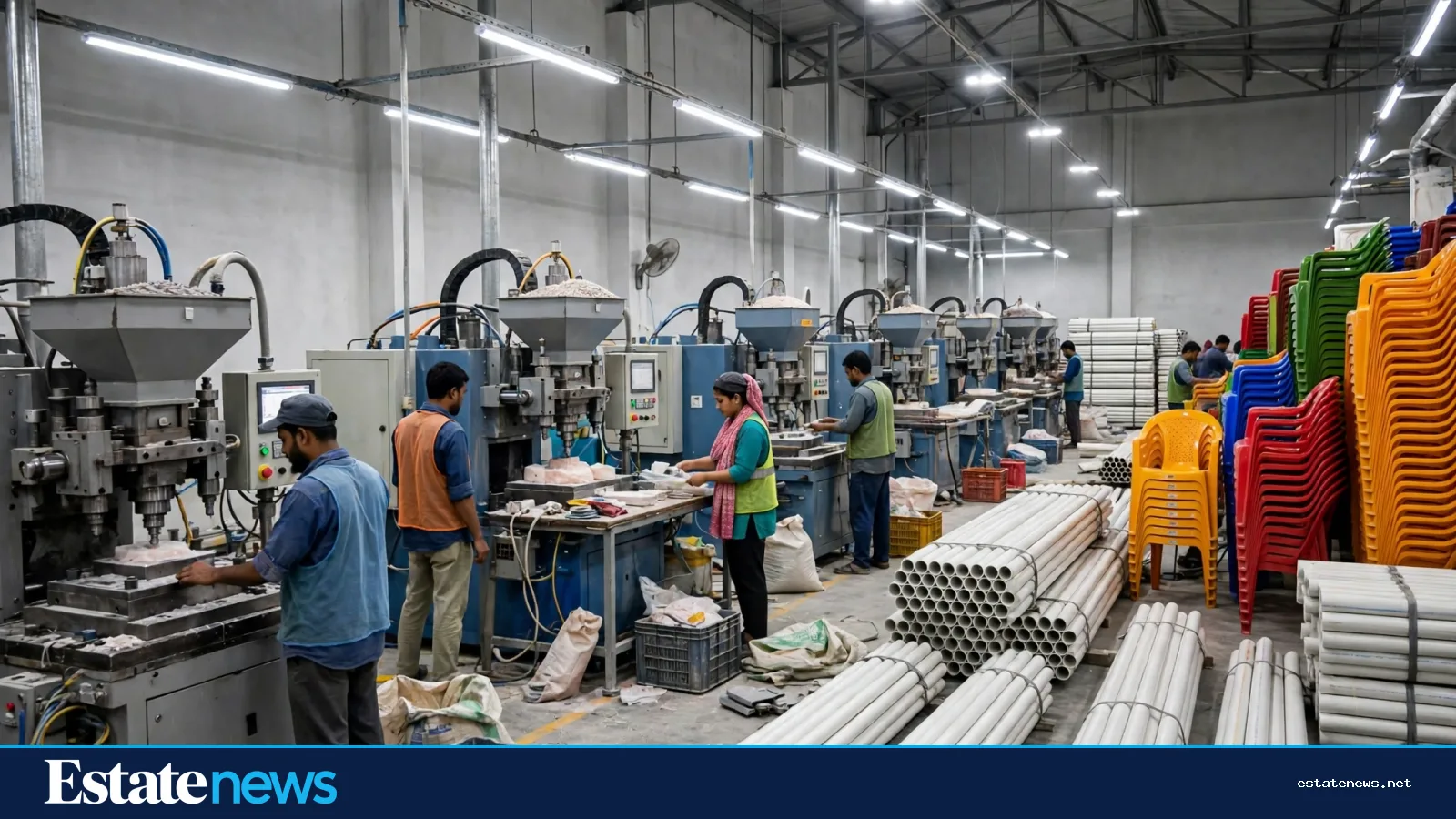
The factory sits on 30 acres inside the National Special Economic Zone at Mirsarai, and it started commercial production last week. Primitek Industries Ltd has put $3.5 million into the plant, according to The Business Standard, and the company says it is aiming high: monthly sales of Tk 150 crore and 5,000 jobs when the site runs at full capacity.
That is a target, not a result. The factory began operations only last week, and the numbers describe what the plant is built to do. At full capacity it would turn out around 8,000 tonnes of plastic products a month. Right now it employs around 1,000 people, according to managing director MA Quieum, with plans to recruit another 2,500 in 2027. The 5,000 figure covers direct and indirect employment at full capacity.
What the plant makes today

The products now coming off the line are the ones a new flat needs before anyone moves in. Plastic chairs and pipes, PVC sheets and SPC flooring are in production now, for the domestic market, with exports planned later. The planned range runs much wider, into thousands of household, furniture and construction items: mugs, jugs, buckets and food containers, tables, sofas, wardrobes, shoe racks and kitchen racks, plastic doors, water tanks, uPVC doors and bathroom fittings.
A formal nationwide distribution launch is planned through an event in December, according to the company. Until then, the products reach the market through existing channels. The choice of range is deliberate. Nearly everything on the list goes into a home, either as furniture, as fittings or as part of the building itself. A factory that makes chairs and pipes and flooring under one roof is selling to the same customer three times over: the developer fitting out a project, the family furnishing a new flat, and the contractor laying pipe.
The group behind the plant


Primitek Group is a 30-year-old conglomerate with eight to ten sister concerns, according to the company's own material. It exports to more than 20 countries and has collected nine Export Trophies. Its head office is Primitek Tower in Gulshan 1. The group already works in non-woven materials, garment accessories and PVC products, so the new plant extends a business it knows rather than starting one from scratch.
The early going has not been smooth. The factory has waited 18 months for a gas connection, according to TBS, and is running on diesel in the meantime, which pushes input costs up. Saleh Ahmed, a member of the Invest Bangladesh Authority, told TBS that the gas supply issue has been conveyed to the relevant authorities. Primitek has also asked customs to align raw material valuations with international prices, to keep its costs down and its exports competitive.
Why a plastics factory is a housing story
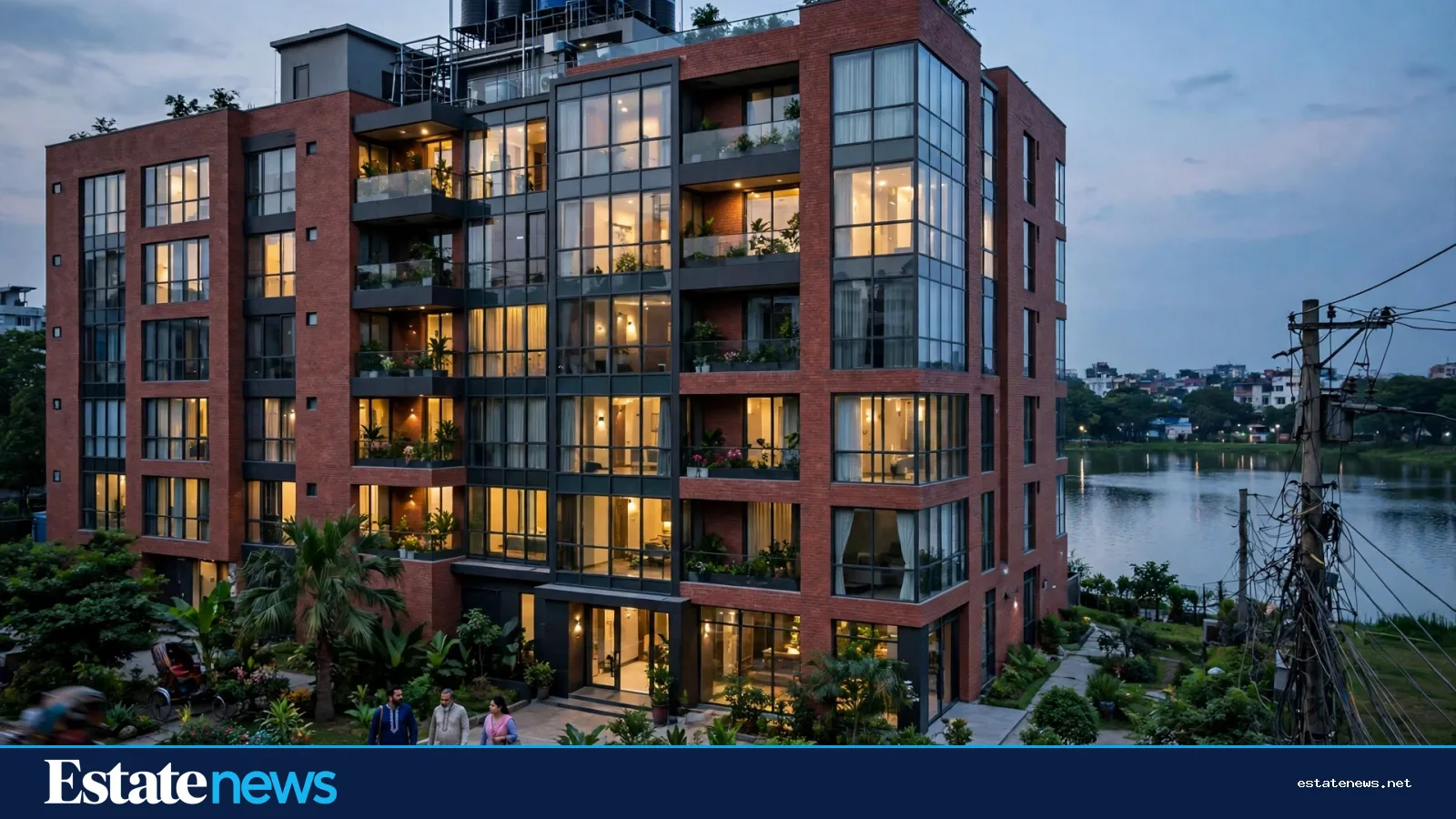
A new flat in Dhaka is finished with plastic at every turn. Pipes carry the water, PVC sheets line the ceilings, SPC flooring covers the floor, and the first furniture a family buys is often plastic: chairs, tables, a wardrobe, a shoe rack. When those goods are made in Mirsarai at scale, the supply chain shortens. A developer ordering in bulk, or a family furnishing a flat on a tight budget, feels the difference in price and in waiting time.
The test for Primitek is the same as for any new plant: whether the December distribution launch puts the products on shelves across the country, whether the gas connection arrives and brings diesel costs down, and whether the monthly sales figure moves from a target on a press release to a number in the accounts. The factory is running. The rest is still to be proved.