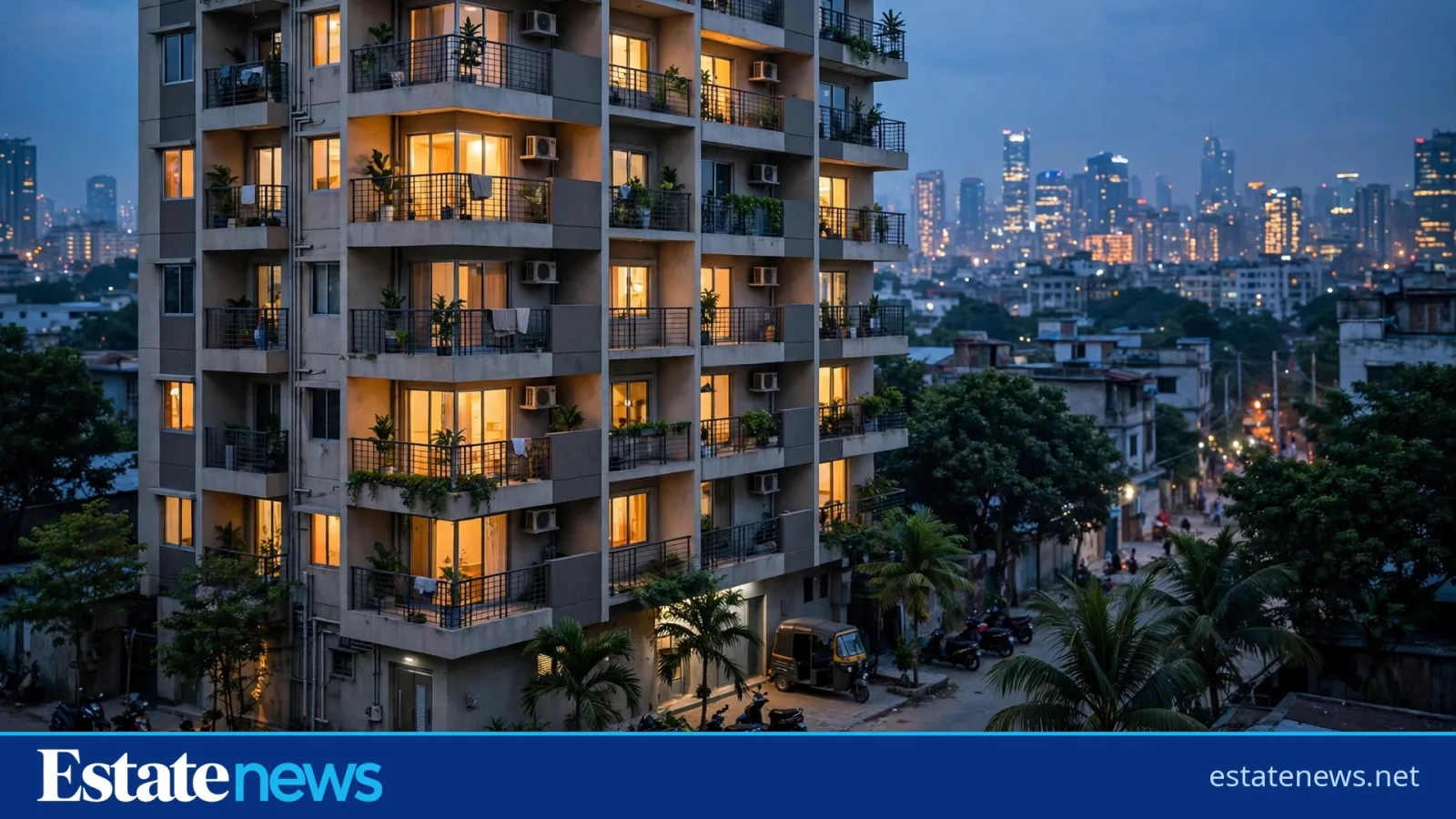
Ask five builders what it costs to construct an apartment in Bangladesh and you may get five different answers, all sincerely given. One quotes Tk 2,500 per square foot. Another quotes Tk 4,000. A third, building for the premium market, quotes Tk 6,000 or more. The spread is wide enough to confuse any buyer, landowner or small developer — yet it is not, for the most part, a sign that someone is wrong. It is a sign that the headline figure is measuring different things.
The first distinction is the most important, and the one most often left out of a casual quote: whether the figure is the cost of construction alone, or the cost of the finished flat. Construction cost per square foot normally means the cost of putting up the building — structure, finishes, labour, services and approvals — divided by the built-up area. It does not include the price of the land. In Dhaka, where land can cost more than the building that stands on it, that exclusion changes everything. A flat's selling price per square foot is therefore always much higher than its construction cost, and comparing the two as if they were the same thing is the single most common error in this debate.
The second distinction is the specification. A standard apartment building and a premium one are, in cost terms, almost different products. One published 2026 construction guide puts a standard apartment building at Tk 3,200 to Tk 3,900 per square foot and a premium building at Tk 5,200 to Tk 6,500 or more, with the difference driven by finishes, fittings, lifts, fire safety systems and design complexity. A separate online construction calculator for ordinary residential work breaks the figure down differently — roughly Tk 300 to Tk 350 for foundations, Tk 1,200 to Tk 1,300 for the superstructure and Tk 800 to Tk 900 for finishing, per square foot — which sums to around Tk 2,300 to Tk 2,550. That lower total is a bare-bones build cost; it leaves out items such as lifts, generators, boundary walls, professional fees and approval costs that a developer's all-in figure usually includes. Both figures can be honest. They are simply not the same basket.

Where the money goes
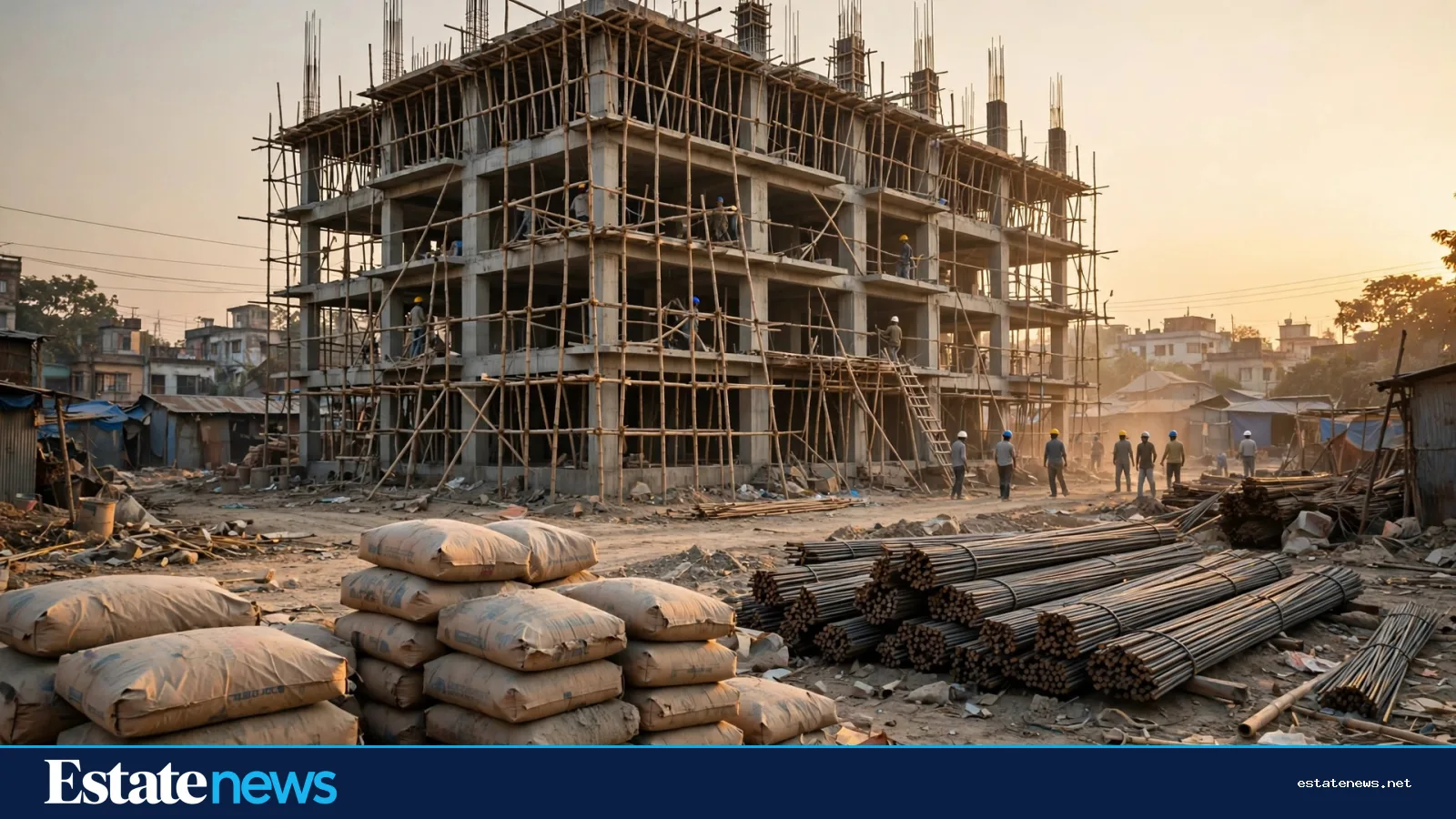
Materials are the largest single block, typically around half to three-fifths of the construction cost, according to industry guides. The structure — foundations, columns, beams and slabs — consumes the most cement, steel reinforcement bar, sand, brick and stone. Finishing comes next: tiles, sanitary fittings, electrical wiring, paint, doors and windows. The choice of finish is where budgets most often drift, because a buyer can walk through a near-complete flat and ask for imported tiles or premium fittings that were never in the original estimate.
Labour is the second-largest block, and it has been rising with demand for skilled masons, rod binders, electricians and plumbers. Transport, equipment hire, site preparation and supervision add a further layer. Then come the costs that are easy to forget when comparing quotes: soil testing, structural and architectural design fees, approval fees, utility connections, lift and generator installation, and the common areas — lobbies, staircases, parking and rooftop works — whose cost is spread across the saleable flats.
What cement and steel are doing to the bill
Two materials dominate the conversation because their prices move the most, and because both depend heavily on imports. Cement production relies on imported clinker; steel production relies on imported scrap and billets. When the taka weakens or freight costs rise, both move, and the whole project budget moves with them.
According to The Financial Express, reporting on 10 October 2026, a 50-kilogram bag of cement was selling at retail for between Tk 540 and Tk 580, up by Tk 30 to Tk 60 from December 2025 rates. In the same report, Trading Corporation of Bangladesh data put higher-quality rod at Tk 92,500 to Tk 94,500 per tonne, about 10.32 per cent higher than a year earlier. Those are retail and market figures, not mill-gate prices, and they vary by brand and by district — but they explain why a quotation prepared six months ago may no longer hold. An earlier assessment by the Real Estate and Housing Association of Bangladesh (REHAB), reported by The Daily Star, found that a round of material price increases had pushed construction costs up by Tk 381 per square foot. The direction of travel is consistent even when the precise numbers differ by year and source.
Why quotes vary — and how to compare them
Beyond materials, five factors explain most of the variation between two honest quotes:
- Height and soil. A ten-storey building on soft Dhaka soil needs deeper foundations and more steel per square foot than a five-storey building on firm ground. Basements, which are expensive to build and waterproof, add further cost.
- Floor efficiency. The ratio of saleable area to total built-up area matters. A building with generous lobbies, wide corridors and large common facilities spreads more non-saleable cost across each flat.
- Finishes and services. Imported tiles, branded sanitary ware, central air-conditioning, double lifts and a standby generator can add hundreds of taka per square foot.
- Timing. A quote is a snapshot. Material prices, diesel costs and labour rates move during a two- or three-year build, and fixed-price contracts without an escalation clause put that risk on the builder — or, eventually, on the buyer.
- What is excluded. Always ask whether the figure includes approval fees, utility deposits, lift and generator costs, boundary walls, landscaping and professional fees. The cheapest quote is often the one with the longest list of exclusions.
For a buyer, the practical use of a per-square-foot construction figure is not to haggle over the selling price — the selling price also reflects land, finance, marketing, sales costs and the developer's margin. Its use is as a sanity check: if a developer claims a premium finish at a standard-build price, or if two similar projects in the same neighbourhood carry wildly different build costs, something in the specification or the scope deserves a second look.
Methodology and limitations
This tracker is compiled from published construction guides and market-price reporting available in October 2026, including The Financial Express market report of 10 October 2026 and Trading Corporation of Bangladesh price data cited in it. Figures are ranges from published sources, not Estate News measurements, and they describe asking and retail prices rather than transaction prices for completed buildings. They are dated: material prices move monthly, and a quotation for a specific project can only come from that project's drawings, soil report and bill of quantities. This tracker will be refreshed as new published price data appears; it is not financial advice and should not be used as a substitute for a quantity surveyor's estimate.
Follow Estate News on Facebook for daily property, market and money updates: https://www.facebook.com/profile.php?id=61593817347872