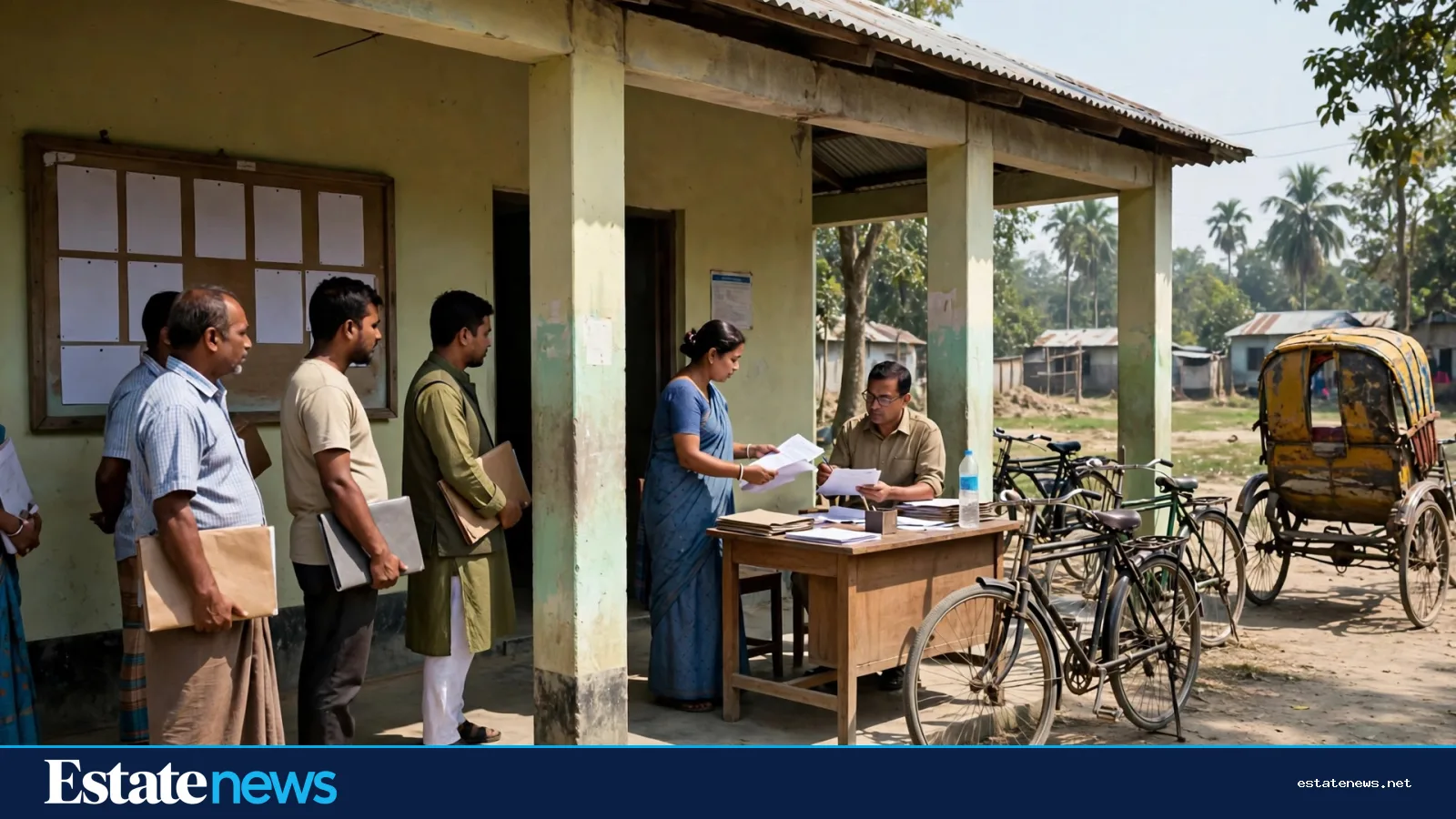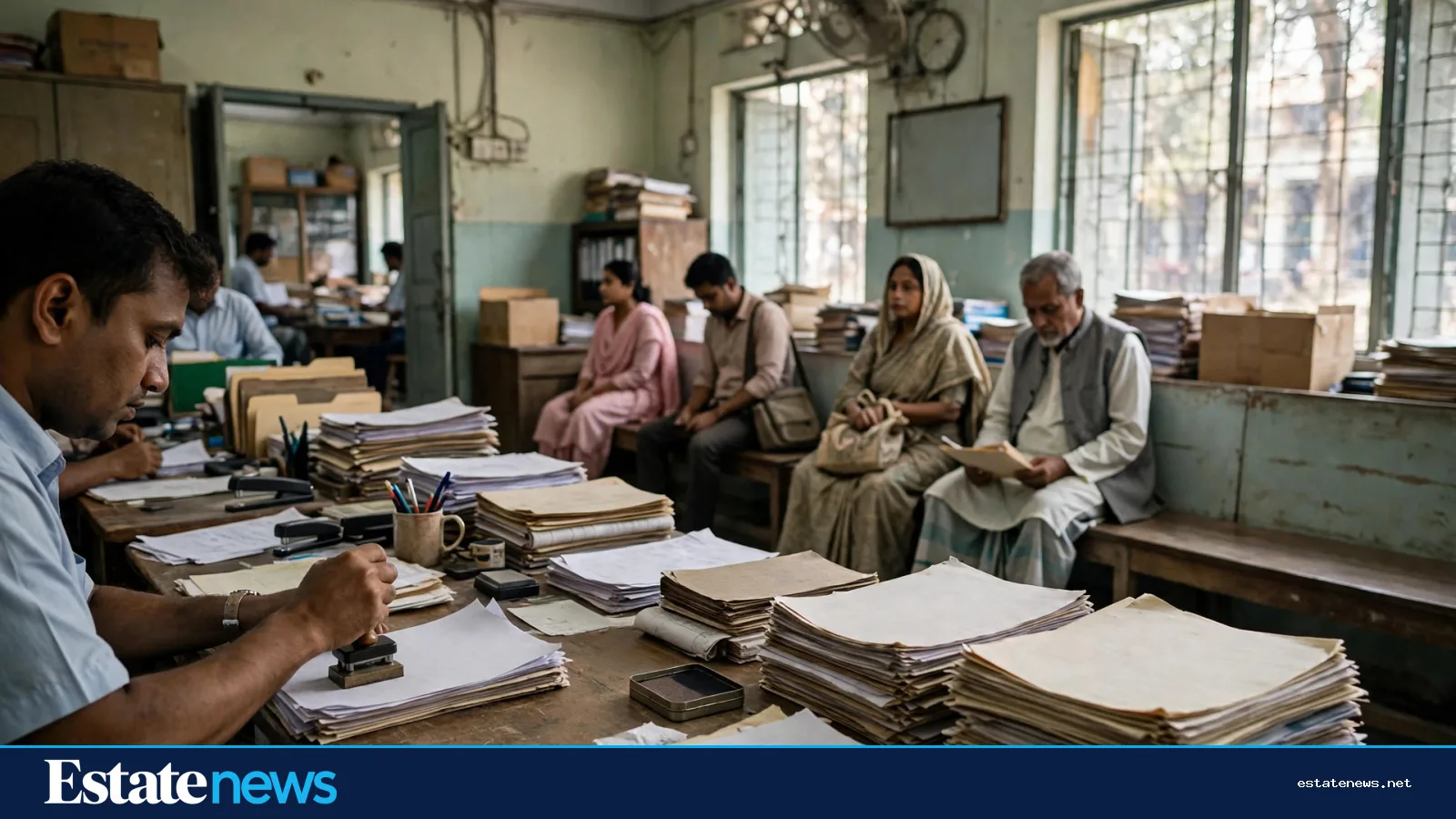
The price of a flat is not the cost of buying a flat. In Bangladesh, a buyer who budgets only for the price agreed with the seller is likely to be caught short at the sub-registry office, where a stack of separate charges — stamp duty, registration fee, local government tax, source tax and, for new flats, VAT — is collected before the deed can be registered. Older guides still quote totals of 12 to 14 per cent of the property's value. More recent rules have changed several of the components, so the only safe approach is to understand each charge separately and get the figure for your own deed confirmed in writing before signing.
This guide is general information, not legal or tax advice. Rates and categories change, and the amount that applies to a particular property depends on its deed value, its location and its category. Confirm the calculation at the relevant sub-registry office, and take a lawyer's advice for any large transaction.
The charges, one by one

Stamp duty — 1.5 per cent of deed value. Under the Stamp Act 1899, the buyer bears stamp duty unless the parties agree otherwise. The rate was cut from 3 per cent to 1.5 per cent in an earlier reform, and current guides continue to quote 1.5 per cent. Stamps up to a small amount are bought directly; the balance is generally paid by pay order.
Registration fee — 1 per cent of deed value. Under the Registration Act 1908, the fee for registering the deed is 1 per cent, with a small minimum. Who bears it is a matter of agreement between buyer and seller, so it should be stated in the sale agreement rather than assumed.
Local government tax — 2 per cent in city corporation and cantonment areas, 3 per cent elsewhere. This is collected at registration by separate pay order, according to current published fee summaries. A flat inside Dhaka city corporation therefore attracts the 2 per cent rate; a property outside a city corporation area attracts 3 per cent.
Source tax — the most complicated item. Under section 125 of the Income Tax Act 2023, tax must be paid before a transfer document can be registered, and the rate is capped at the higher of Tk 20 lakh per katha of land, Tk 1,000 per square foot of a building or flat, or 10 per cent of the deed value — those are ceilings, not the rates themselves. The actual rates are prescribed in the Source Tax Rules 2026, published in the Bangladesh Gazette on 5 July 2026 and in force from 1 July 2026. For land, the published summary puts the rates at 5, 3 or 2 per cent depending on area, or a per-decimal floor if that is higher. For buildings and flats, the summary cites Tk 800 per square metre or 8 per cent for Classes A to D, with lower figures elsewhere. By statute the source tax is the seller's liability, but in practice the burden is often negotiated into the price — which is why the agreement must say who pays it. Because the category system and the per-decimal floor can change the figure sharply, particularly in prime areas, this is the item most likely to surprise a buyer, and the one most worth confirming at the sub-registry.
VAT on new flats — 2 per cent up to 1,600 square feet, 4.5 per cent above. VAT applies to flats sold by developers, not to a resale between individuals, and is generally passed on to the buyer. A flat of 1,600 square feet or less attracts 2 per cent; a larger flat attracts 4.5 per cent, according to current published summaries.
Developer tax on new flats. Where a developer sells a new flat, section 126 tax also applies — published summaries cite Tk 300 to Tk 1,600 per square metre for residential property. This is the developer's liability by statute, but like VAT it can feed into the price the buyer is asked to pay.
Mutation fee — Tk 1,170. Registration is not the end of the process. After registration, the buyer must apply for mutation (namjari) to have their name entered in the land record. The official e-mutation fee total is Tk 1,170 — a Tk 20 court fee, a Tk 50 notice fee and a Tk 1,100 duplicate carbon receipt (DCR) fee. Mutation is covered in detail in a companion article in this series.
A worked illustrative example
Take a resale flat in Dhaka city corporation with a deed value of Tk 1 crore and a size of 1,200 square feet. The three fixed-percentage charges are straightforward to illustrate:
- Stamp duty at 1.5 per cent: Tk 1,50,000
- Registration fee at 1 per cent: Tk 1,00,000
- Local government tax at 2 per cent: Tk 2,00,000
- Subtotal of those three: Tk 4,50,000, or 4.5 per cent of the deed value
That subtotal is not the total cost. Source tax must be added, and its amount depends on the property's category and the per-square-metre or percentage rule that applies — it can range from a modest figure to a large one, which is why this example deliberately does not present a single "total". For a new flat from a developer, VAT of 2 per cent (Tk 2,00,000 on a Tk 1 crore flat of 1,600 square feet or less) would also apply. Add the Tk 1,170 mutation fee, plus the buyer's own costs — lawyer's fees, deed-writer charges and loan-related costs — and the gap between the flat's price and the cash needed on the day becomes clear. Older guides quoting 12 to 14 per cent reflected earlier, higher rates; do not use them as your budget.
Who pays what — and what to confirm
As a default, stamp duty falls on the buyer, source tax falls on the seller by statute, and registration fee and local government tax fall where the agreement places them. In practice, everything is negotiable, and the negotiation only protects you if it is written into the agreement. Before registration, ask the sub-registry office for a written calculation for your deed, and check four things: whether the deed value used is the agreed price or a government-assessed value, if that is higher; which source-tax category and floor applies to your property; whether VAT applies at all, since it does not apply to resales; and whether any RAJUK transfer or mutation fee applies separately, as it does for second-hand RAJUK flats.
Two further cautions. First, the deed value matters: duties and fees are calculated on the deed value, and understating it to save tax is unlawful and can create far larger problems later. Second, registration alone does not complete your ownership in the government's records — without mutation, your name does not appear in the land record, and a later sale becomes difficult. Budget for both steps, confirm both figures, and keep every receipt: the pay orders, the A-challans for tax, and the DCR. They are the paper trail of your ownership.
Follow Estate News on Facebook for daily property, market and money updates: https://www.facebook.com/profile.php?id=61593817347872