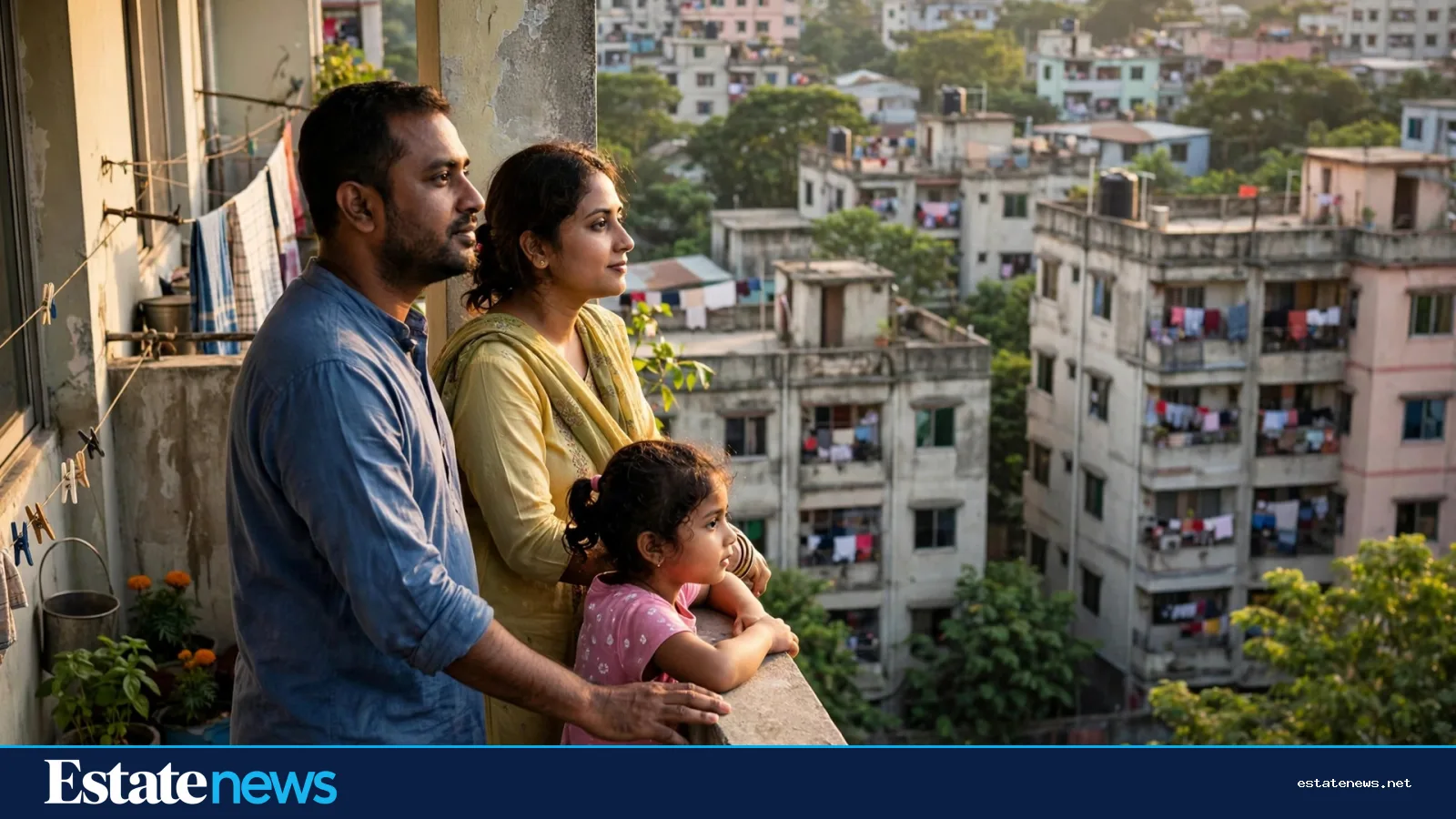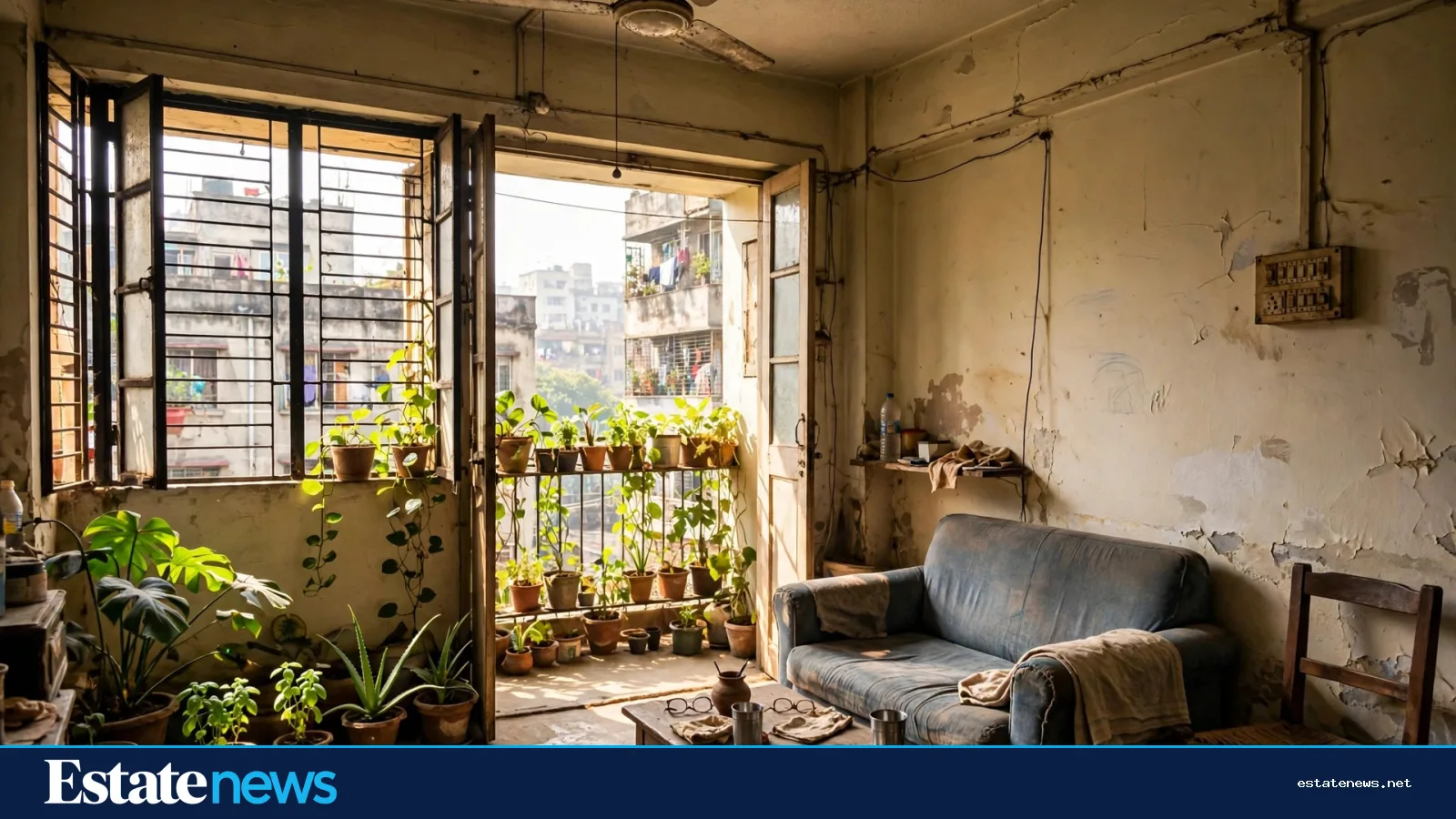
For most Dhaka families, the rent-versus-buy question is settled by feeling long before it is settled by arithmetic. Owning a flat is security, status and a hedge against a landlord's notice. Renting is flexibility and a smaller monthly bill. Both instincts have merit. Neither, on its own, is a financial plan.
The honest way to compare the two is to put the same flat on both sides of the ledger, with every assumption stated, and then ask what could change the answer.
The worked comparison — an illustration, not a recommendation

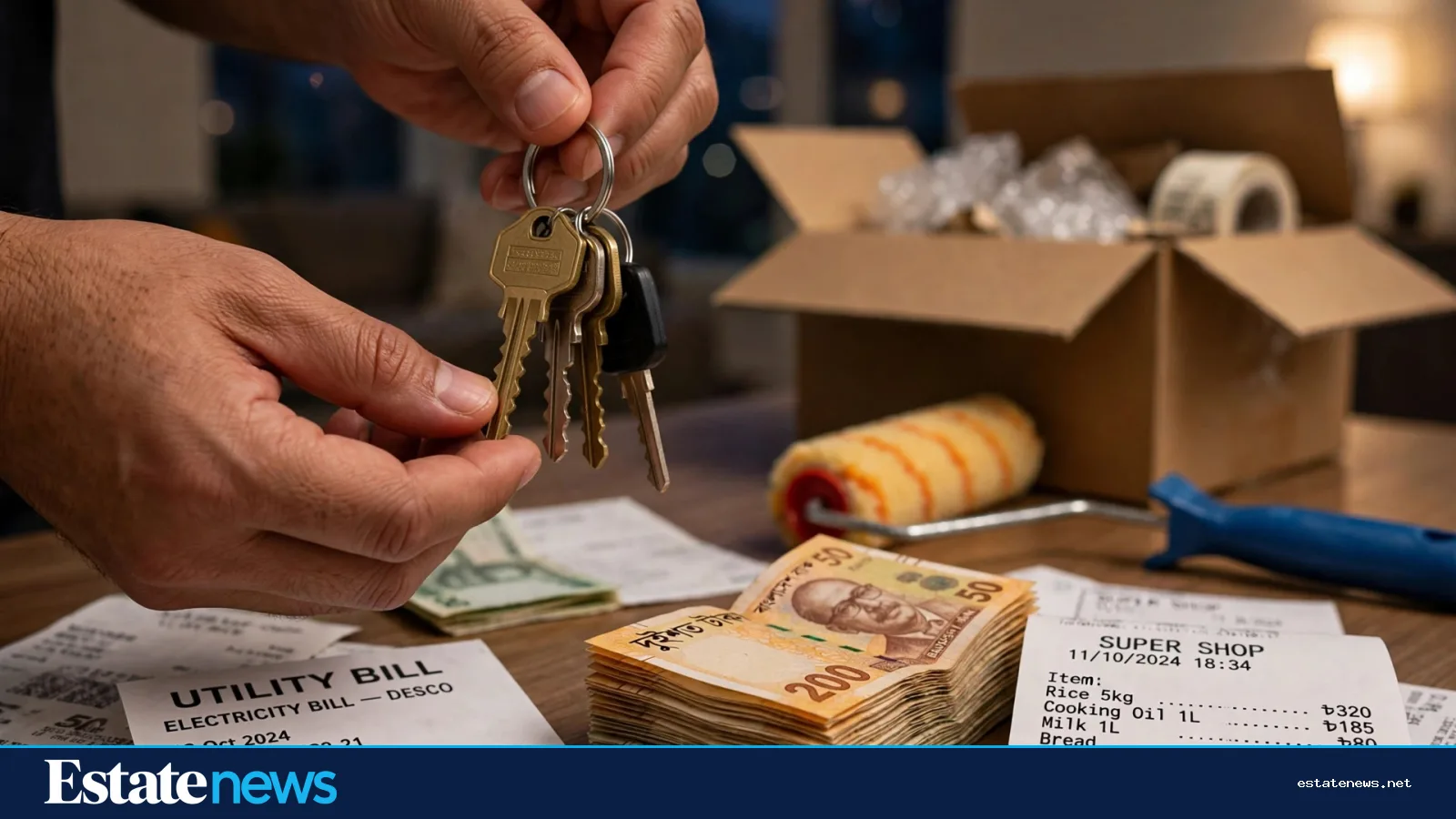
Take a mid-sized family flat in Dhaka priced at Tk 1 crore. A buyer who puts down 20 per cent — Tk 20 lakh — and borrows the remaining Tk 80 lakh at an illustrative interest rate of 11 per cent over 20 years would pay a monthly instalment of about Tk 82,600. That figure is the standard equated monthly instalment calculation; the total repaid over 20 years would be roughly Tk 1.98 crore, of which about Tk 1.18 crore is interest. A comparable rented flat might cost Tk 40,000 to Tk 45,000 a month in many middle-income neighbourhoods.
On monthly cash flow alone, renting wins by roughly Tk 38,000 to Tk 43,000 a month. But that is only the first line of the comparison. The buyer's instalment is not all cost: part of each payment repays principal, building ownership in an asset that may hold or gain value. The renter's payment builds no equity, but the renter keeps the Tk 20 lakh deposit money — and the monthly difference — free to invest elsewhere. If that money earns a steady return, the renter's wealth can grow too.
The comparison also changes with the interest rate. Bank home-loan rates in Bangladesh currently sit in a wide band of roughly 9 to 13 per cent, according to recent market guides, and most are variable — the Bangladesh Bank policy rate was 9.5 per cent in August 2026, and lenders add their own margin on top. At 10 per cent instead of 11, the same Tk 80 lakh loan over 20 years costs about Tk 77,200 a month. At 13 per cent, it rises above Tk 93,000. A buyer who can only afford the instalment at today's rate, and not at a rate two points higher, is buying fragility, not security.
What the monthly comparison leaves out
Buying carries costs renting does not. Registration and related government charges on a flat in Dhaka typically add roughly 8 to 14 per cent of the deed value, depending on the area and the size of the flat — on a Tk 1 crore flat, that is Tk 8 to 14 lakh before a single piece of furniture is bought. Owners also pay monthly service charges, periodic repairs, and the cost of replacing appliances and fittings over the years. Renters, by contrast, face a different risk: rents in Dhaka have risen sharply, with Estate News reporting earlier this month that rents are up 27 per cent in four years, and a landlord can decline to renew or raise the rent at renewal.
Time horizon is the decisive variable. Over two or three years, the upfront costs of buying — registration charges, loan fees, moving and furnishing — are spread over too few months to recover, and selling quickly means paying those costs again on the next purchase. Over ten or fifteen years in the same flat, the instalment stays roughly fixed in nominal terms while rents tend to rise, and the principal repaid becomes a substantial asset. As a rule of thumb used by household-finance writers everywhere, the shorter your expected stay, the stronger the case for renting; the longer and more certain it is, the stronger the case for buying.
The questions to ask before deciding
- How long will you realistically live in this flat — and how certain is that?
- Could you still pay the instalment if the interest rate rose by two percentage points?
- After the down payment and registration costs, would you still hold at least six months of expenses as an emergency fund?
- What return could the down payment and the monthly saving earn if invested instead — and are you disciplined enough to actually invest it?
- How much do you value stability, control over the home, and freedom from a landlord's decisions?
There is no universal answer, and any adviser who gives one without asking these questions is selling, not advising. Renting is not throwing money away; it is paying for housing without tying up capital or taking on debt. Buying is not automatically an investment; it is a leveraged, illiquid commitment whose return depends on prices, rates and how long you stay. Run the numbers on your own flat, your own loan offer and your own time horizon — and treat any comparison that hides its assumptions as marketing.
This article is for information only and is not financial advice. Loan rates, charges and tax rules change; confirm the current terms with your bank and the sub-registry office before deciding.
Follow Estate News on Facebook for daily property, market and money updates: https://www.facebook.com/profile.php?id=61593817347872