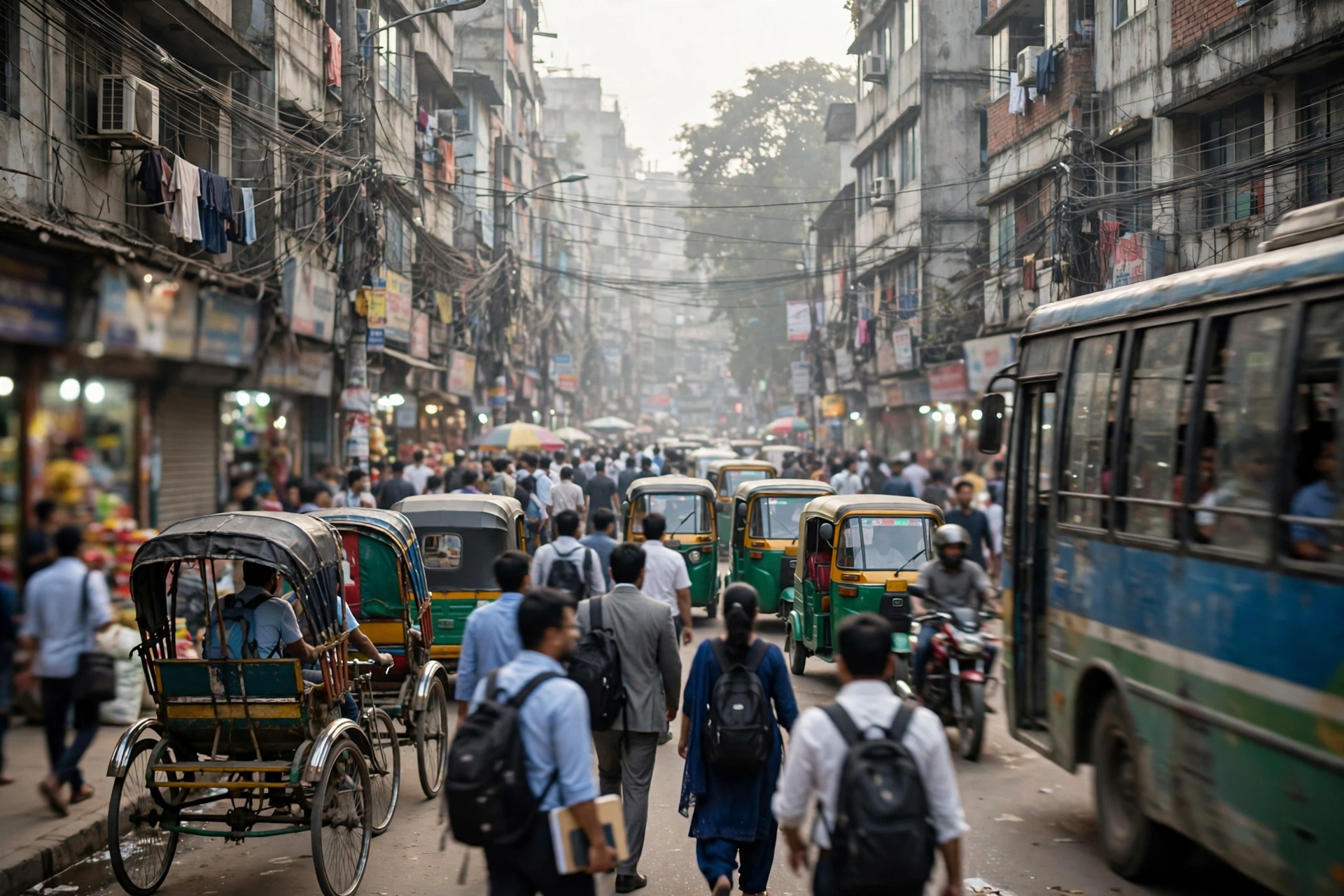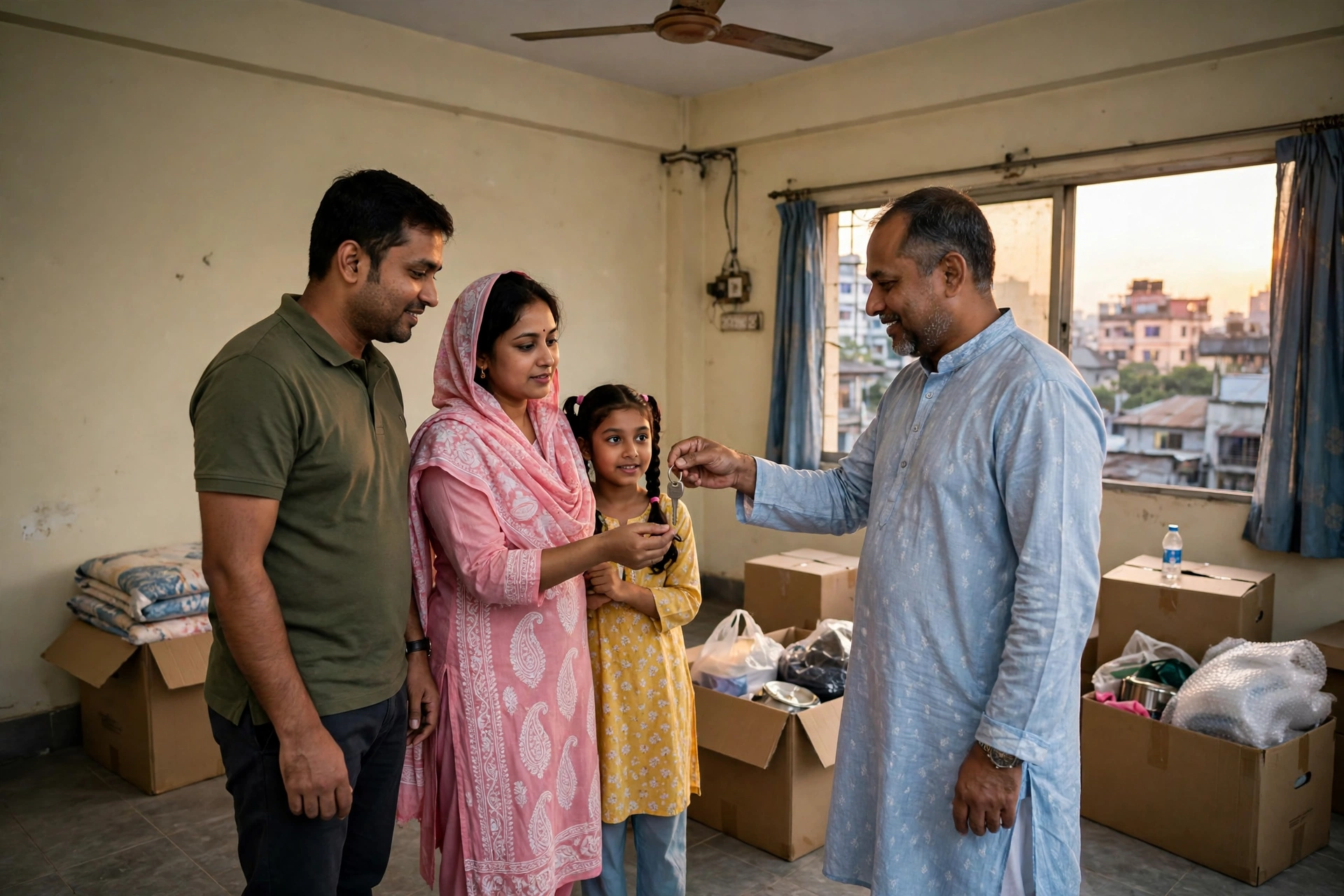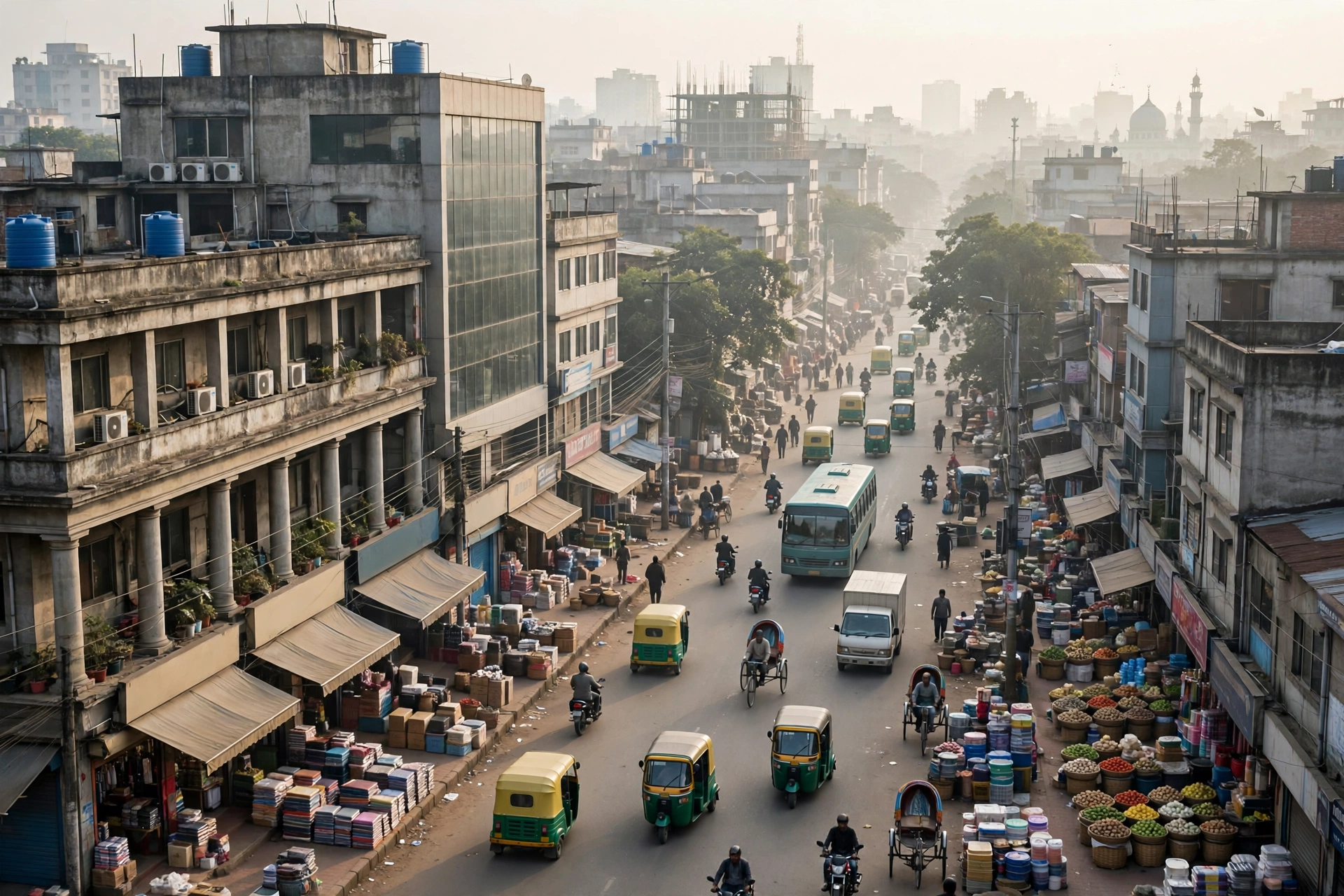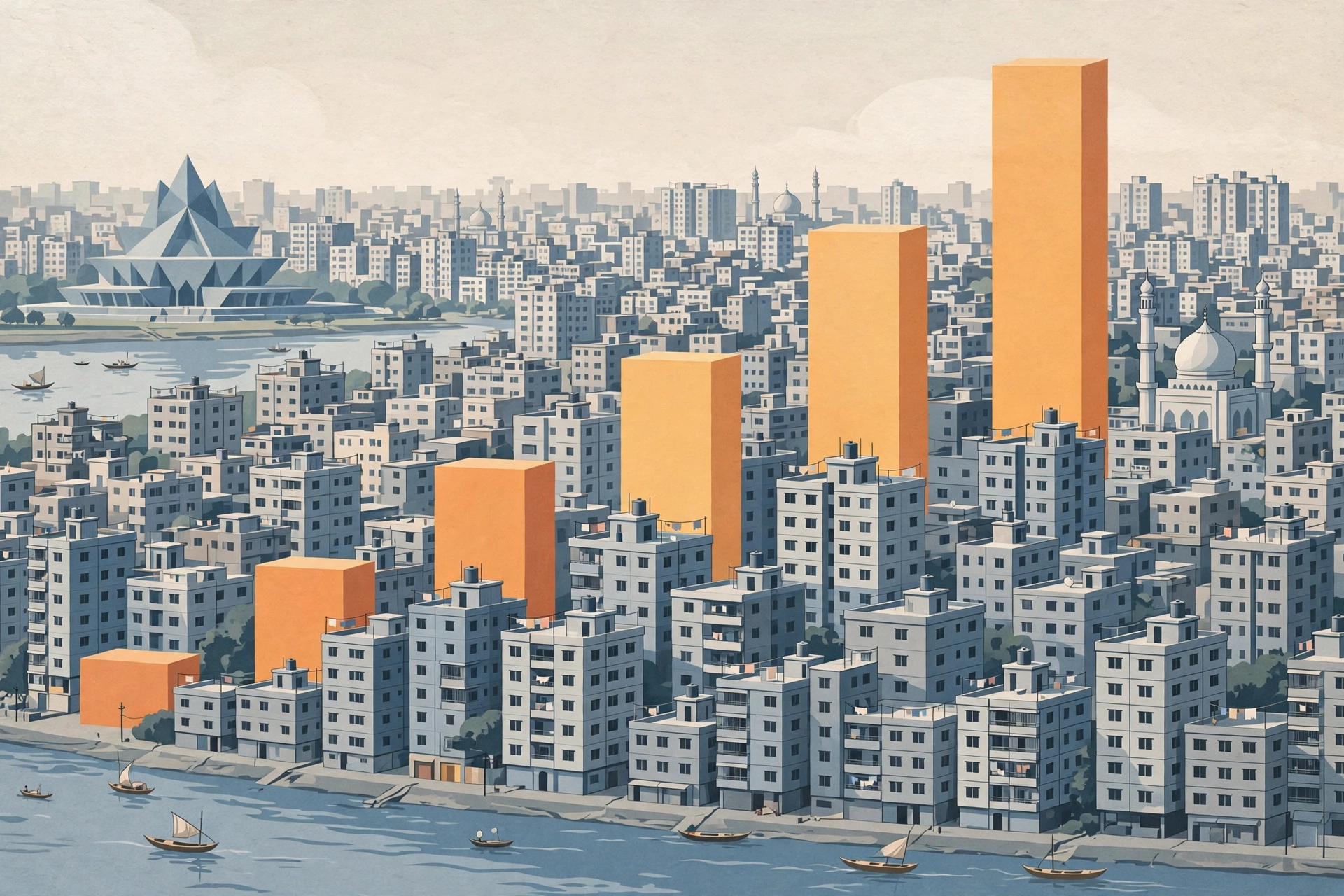
Feelings about housing affordability are strong in Dhaka. The data, updated on 24 October 2026, gives them a shape. According to Numbeo's Dhaka property figures, based on 186 entries from 25 contributors over the past 18 months, the price-to-income ratio stands at 24.44. In plain terms, a typical apartment costs many multiples of a typical annual income — a level that places home ownership beyond easy reach for most salaried households without long-term borrowing, family support or a long savings period.
The mortgage burden tells a similar story. Mortgage payments as a percentage of income were recorded at 296.09 per cent, with a loan affordability index of just 0.34, where a value of 1.0 would indicate comfortable affordability. The average monthly net salary after tax in the dataset was Tk30,292.86, while the annual mortgage interest rate for a 20-year fixed loan was recorded at 10.67 per cent, within a range of 9 to 14 per cent.
Rents versus prices
Monthly rent for a one-bedroom apartment in the city centre averaged Tk18,294.12, against Tk8,600 outside the centre. A three-bedroom apartment in the centre averaged Tk53,187.50, against Tk26,375 outside. Purchase prices averaged Tk198,561.69 per square metre in the centre and Tk97,525.35 outside — a near two-to-one centre premium that explains why so many families rent centrally and buy further out.
The price-to-rent ratios — 38.96 in the centre and 39.47 outside — imply that buying costs roughly 39 years of rent at current levels, before costs. Gross rental yields of 2.57 per cent in the centre and 2.53 per cent outside confirm the same point from the landlord's side: Dhaka property, at current prices, is a long-horizon asset, not a high-yield one.
- Price-to-income ratio: 24.44
- Gross rental yield (city centre): 2.57 per cent
- Average net monthly salary (dataset): Tk30,292.86
- Price per sq metre (centre / outside): Tk198,562 / Tk97,525
Data does not make Dhaka affordable. It makes the size of the challenge impossible to ignore.
These are crowd-sourced estimates, not official statistics, and they should be read with that caution. But their direction matches the lived experience of buyers: high prices relative to incomes, high borrowing costs, and a rental market that, for many, remains the more realistic route to a home in the city.